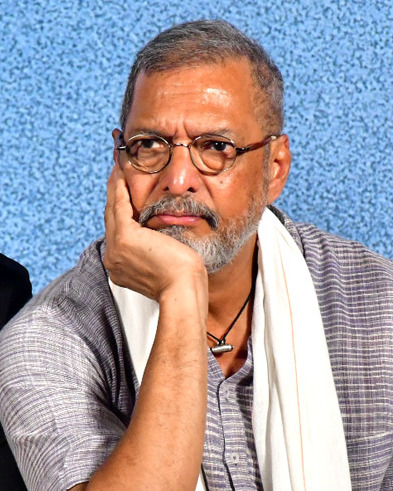
Nana Patekar has died at the age of 75. The veteran Hindi and Marathi actor died in Goa in the early hours of Thursday, October 8, 2026, after suffering a severe cardiac arrest. His death was confirmed by his son Malhar Patekar and by doctors at Manipal Hospital, where medical teams attempted to revive him.
The actor was found unresponsive at his residence in Dona Paula, Goa. Reports from multiple news organisations say doctors continued resuscitation efforts for roughly 45 minutes, but he could not be revived. The reported time of death is around 5:20 a.m. Some early reports have given slightly different times; the post-mortem process is expected to provide further medical details.
Nana Patekar Death: What Happened in His Final Hours?
According to information attributed to Manipal Hospital doctor Dr Shekhar Salkar and reports from The Indian Express and other outlets, Patekar contacted a friend at about 2:30 a.m. saying that he was feeling unwell and experiencing discomfort and pain on the left side. The friend later reached his residence at around 4 a.m. and found him in serious distress.
An ambulance and medical team were called. CPR was started, and he was subsequently taken to Manipal Hospital in Goa. Doctors continued attempts to revive him for about 45 minutes. He was declared dead in the early morning.
Authorities have initiated the required medico-legal procedures and a post-mortem examination has been ordered. Therefore, while cardiac arrest is being reported as the immediate medical event, the precise underlying medical cause should not be treated as final until the relevant medical and official procedures are completed.
Nana Patekar’s Death Confirmed by Family
Patekar’s son, Malhar Patekar, confirmed the death to The Indian Express. Major Indian and international news organisations subsequently reported the actor’s death. The confirmation was important because social media posts about celebrity deaths can circulate before families or authorities make an official statement.
State Funeral Announced in Maharashtra
The Maharashtra government announced that Nana Patekar would be accorded a state funeral in recognition of his contribution to theatre and cinema. Reports said the final rites would take place in Pune on October 8.
President Droupadi Murmu, Vice President C. P. Radhakrishnan and Prime Minister Narendra Modi expressed grief over his passing, highlighting Patekar’s versatility and contribution to Indian cinema. Film personalities and colleagues also shared tributes, remembering his distinctive voice, powerful performances and long association with theatre and films.
Who Was Nana Patekar?
Born Vishwanath Patekar in Maharashtra in 1951, Nana Patekar built a career spanning theatre, Marathi cinema and Hindi cinema. He was recognised for an intense screen presence, distinctive voice, controlled expressions and emotionally complex characters.
He entered the film world in the late 1970s and moved successfully between serious drama, action, social films and mainstream comedy. Over several decades, he worked with leading directors and actors while maintaining an identity that was markedly different from the conventional Bollywood hero.
His performances often relied on dialogue, silence, body language and emotional restraint rather than elaborate action or conventional romantic imagery. That approach made many of his characters memorable even when he was not the central hero of a film.
Early Career and Rise to Recognition
Patekar’s early career was closely linked with theatre. The discipline of stage performance helped develop the vocal projection, timing and physical control that later became important parts of his film acting. His early film appearances established him as a serious performer capable of handling difficult supporting roles.
Gaman was among the early films of his screen career. His work gradually attracted wider attention, and by the late 1980s he was appearing in films that gave him opportunities to play morally complicated and psychologically intense characters.
Parinda: A Major Turning Point
One of the defining performances of Nana Patekar’s career came in Parinda. His portrayal of the ruthless character Anna demonstrated his ability to create a threatening screen presence without relying solely on physical aggression.
The performance became an important milestone and contributed to his reputation as one of the most dependable character actors of his generation. It also helped establish the serious, intense image that audiences associated with several of his later performances.
Krantiveer and National Recognition
Krantiveer became another landmark in Patekar’s career. His performance combined anger, vulnerability and social frustration, and the film became one of the works most strongly associated with his name.
His work received major national recognition, and he ultimately became a three-time National Film Award winner. The awards reflected different phases of his career and demonstrated the breadth of roles he undertook.
Nana Patekar’s Major Films
- Gaman (1978) – among the early films of his screen career.
- Ankush – an important early performance that reflected his interest in socially relevant cinema.
- Pratighaat – another significant film from the period in which his reputation was developing.
- Parinda – a landmark performance that strengthened his reputation as a serious actor.
- Prahaar: The Final Attack – a film he also directed, centred on military life and discipline.
- Krantiveer – one of his most remembered performances and a major award-winning role.
- Agni Sakshi – another acclaimed performance that brought major recognition.
- Khamoshi: The Musical – a widely appreciated dramatic performance.
- Ab Tak Chhappan – a role that reinforced his association with intense crime and police dramas.
- Apaharan – another notable performance from his later Hindi-film career.
- Raajneeti – part of a strong ensemble cast in a political drama.
- Welcome – his comic portrayal of Uday Shetty introduced his work to a new generation of mainstream audiences.
- Natsamrat – a celebrated Marathi performance that became an important part of his later career.
- Housefull 5 and other later projects – demonstrating his continued work in mainstream cinema.
Welcome and His Comic Side
Although Patekar was strongly associated with intense dramatic roles, his performance as Uday Shetty in Welcome showed another side of his acting. The character became widely popular because of the combination of comic timing, exaggerated reactions and Patekar’s distinctive delivery.
The success of the role introduced him to audiences who may have known him primarily through serious films. It also demonstrated that his acting range extended comfortably into mainstream comedy.
Natsamrat and Marathi Cinema
Patekar maintained a strong connection with Marathi cinema throughout his career. Natsamrat was particularly significant because it gave him an emotionally demanding central role as an ageing theatre actor confronting family relationships, memory and loss.
The film also connected directly with the theatrical tradition that had shaped Patekar’s own artistic journey. His performance was widely discussed as an example of the depth and emotional control that he brought to mature roles.
Awards and Recognition
Nana Patekar was a three-time National Film Award winner and was honoured with the Padma Shri in 2013 for his contribution to the arts. He also received major industry awards during different phases of his career.
His awards were only one part of his legacy. His strongest recognition came from audiences and filmmakers who repeatedly sought him for characters requiring authority, emotional complexity, anger, vulnerability or dark humour.
Nana Patekar and Theatre
Patekar’s artistic foundation was closely connected with theatre. His theatrical background helped shape the voice projection, pauses, body language and emotional control that became hallmarks of his film performances.
That background also influenced the way he approached dialogue. Instead of simply delivering lines, he often used pauses and changes in tone to communicate what a character was thinking. This became one of the most recognisable features of his acting style.
His Work Beyond Cinema
Nana Patekar was also known for social initiatives. His public association with the Naam Foundation brought attention to support for farmers and rural communities, including work connected with drought-affected areas and water-related projects.
He also had a notable association with the Indian Army. During the 1999 Kargil conflict, reports documented his time with military personnel. His connection with the armed forces became another notable part of his public identity.
Nana Patekar as Director
Patekar was not limited to acting. He also directed Prahaar: The Final Attack, a film centred on military training, discipline and duty. His work behind the camera reflected his interest in stories involving social responsibility and institutions.
His career therefore covered several aspects of filmmaking, including acting, direction and involvement with socially focused projects.
Nana Patekar’s Final Public Appearance
Reports published after his death noted that Patekar had attended a public event in Goa on October 4, 2026. At that event, he spoke about life, public responsibility and mortality. Those remarks have received renewed attention following his death, but they should be understood in their original context rather than treated as a prediction of what would happen days later.
Final Films and Unreleased Work
Patekar remained professionally active in his seventies. Reports following his death said he had completed work on projects that are expected to reach audiences after his passing. His final screen appearances will therefore form a closing chapter of a career that stretched across almost five decades.
The release schedules of unfinished or completed projects can change after an actor’s death. Details about individual films should therefore be confirmed from official production announcements before being treated as final.
Tributes After Nana Patekar’s Death
Tributes from political leaders, actors and other public figures described Patekar as a distinctive and versatile performer whose work left a lasting mark on Indian cinema. His long career connected with audiences across generations, from serious Marathi and Hindi cinema to popular Bollywood comedy.
For colleagues in the film industry, his passing represents the loss of an actor whose screen presence was difficult to imitate. For audiences, his legacy includes both powerful dramatic characters and memorable comic performances.
Why Nana Patekar Remained Different
One reason Patekar remained relevant across generations was his ability to avoid being restricted to a single type of role. He could play a police officer, soldier, gangster, politician, troubled family man or comic character while retaining a recognisable but adaptable screen identity.
His dialogue delivery became particularly influential. Even short lines could become memorable because of his pauses, voice modulation and facial expressions. This helped several of his characters remain popular long after the original films had left theatres.
Nana Patekar Death: Key Facts
| Detail | Information |
|---|---|
| Actor | Nana Patekar |
| Birth name | Vishwanath Patekar |
| Age at death | 75 |
| Date of death | October 8, 2026 |
| Place | Dona Paula, Goa / Manipal Hospital, Goa |
| Reported immediate medical event | Severe cardiac arrest |
| Reported resuscitation attempt | About 45 minutes |
| Post-mortem | Ordered; further medical details may follow |
| State funeral | Announced by Maharashtra government |
| Major recognition | Three National Film Awards and Padma Shri |
What Happens Next?
The post-mortem and official procedures are important because initial reports can describe the immediate event without establishing every underlying medical detail. CareerSphere will update this report if reliable official information changes the currently reported facts.
Readers should also be cautious about unverified social-media claims concerning the actor’s medical history, final conversations or private family matters. Only information confirmed by family representatives, medical authorities or established news organisations should be treated as reliable.
Remembering Nana Patekar
Nana Patekar leaves behind a filmography that crossed languages, genres and generations. His journey from theatre to major Hindi and Marathi films, his National Film Award-winning performances, his comic success in Welcome and his work in Natsamrat all form part of a career that cannot easily be placed in one category.
His contribution extended beyond individual performances. He represented a style of Indian acting built around character, dialogue, observation and emotional intensity. For many viewers, that distinctive style became his signature.
As the film industry and audiences remember him, his most enduring legacy will be the range of characters he created and the ability of those performances to remain recognisable long after their original release.
Sources and Image Credit
This report was prepared using cross-checked information from Reuters, Associated Press, The Indian Express, India Today, News On AIR and other established reports published on October 8, 2026. The featured image is a Government Open Data License – India image from Wikimedia Commons, originally published by the Press Information Bureau, Ministry of Information & Broadcasting, Government of India. It is used with the required attribution.
Sources: Reuters; Associated Press; The Indian Express; India Today; News On AIR; Wikimedia Commons.
Leave a Reply