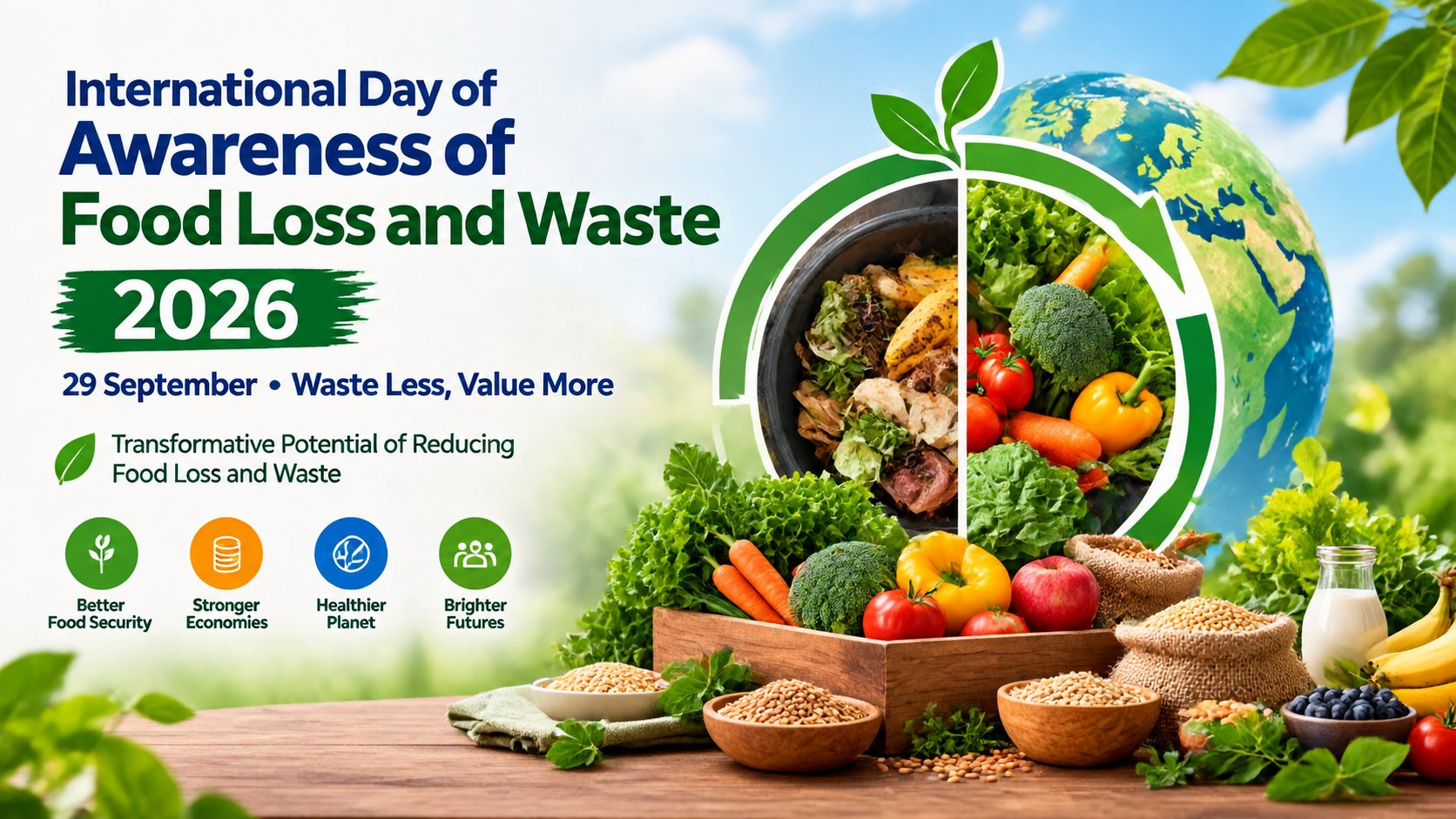
International Day of Awareness of Food Loss and Waste 2026 will be observed on 29 September 2026. The seventh observance, co-convened by the Food and Agriculture Organization of the United Nations (FAO) and the United Nations Environment Programme (UNEP), focuses on “Transformative Potential of Reducing Food Loss and Waste.” In addition, preventing unnecessary loss can strengthen food security, protect natural resources, reduce greenhouse-gas emissions and support sustainable agrifood systems.
Key Details for 29 September 2026
| Date | 29 September 2026 |
| Day | Tuesday |
| Observance | Seventh observance |
| 2026 Theme | Transformative Potential of Reducing Food Loss and Waste |
| Convened by | FAO and UNEP |
| Related goal | UN SDG Target 12.3 |
What Is the International Day of Awareness of Food Loss and Waste?
The United Nations designated 29 September for this global observance in 2019. Its purpose is to encourage awareness and collective action across the food system. Moreover, it supports Sustainable Development Goal Target 12.3, which aims to halve per-capita global food waste at retail and consumer levels and reduce food losses along production and supply chains by 2030.
Official 2026 Theme and Meaning
According to FAO, the official 2026 theme focuses on the “Transformative Potential of Reducing Food Loss and Waste.” Importantly, FAO says action in this area can create a triple win: improving food security and nutrition, reducing pressure on natural resources and greenhouse-gas emissions, and improving productivity and economic growth. At the same time, the 2026 global event examines links between the issue, forests and sustainable agrifood systems.
Why Food Loss and Waste Matter
When edible products never reach a plate, the land, water, energy, labour and money used to produce them are also squandered. FAO reports that an estimated 13% of food produced globally is lost after harvest and before reaching retail. Updated estimates cited by FAO show that 19% of food available to consumers, equivalent to about 1.05 billion tonnes, is wasted through households, food service and retail.
Households account for about 60% of consumer-level food waste, while food service accounts for 28% and retail for 12%. Furthermore, discarded or lost food contributes significantly to greenhouse-gas emissions. Therefore, prevention can protect natural resources while improving the efficiency and resilience of food systems.
Understanding Loss and Waste Across the Food Chain
Food loss generally happens earlier in the supply chain, including during harvesting, storage, processing and transportation. Food waste generally occurs closer to consumers, including at retail outlets, restaurants, institutions and households. Because the causes differ, solutions must cover the entire food system.
Practical Steps for Households
- Plan meals before shopping and purchase only what you need.
- Check your refrigerator and pantry before buying more food.
- Store fruits, vegetables, grains and cooked foods properly.
- Use older ingredients first.
- Serve sensible portions and safely store leftovers.
- Freeze suitable food before it spoils.
- Turn surplus ingredients into another meal instead of discarding them.
- Share safe surplus food through appropriate community channels where possible.
How Schools, Offices and Communities Can Participate
Schools can organize awareness programmes, poster competitions and food-waste measurement activities. Offices and institutions can review catering quantities and encourage responsible portions. Restaurants and food businesses can improve inventory planning, storage and redistribution practices. Community groups can organize campaigns explaining the environmental and social costs of wasting food. Readers can also explore CareerSphere News for more important-day and awareness updates.
Wishes and Awareness Messages
- May we value every meal and waste less for a more sustainable future.
- Respect food, protect resources and share responsibly. Happy International Day of Awareness of Food Loss and Waste 2026.
- Small changes in our kitchens can make a meaningful difference for people and the planet.
- Buy wisely, store carefully and use creatively—every action to reduce food waste matters.
- Food is too valuable to waste. Let 29 September remind us to consume responsibly every day.
- May our choices today help build a food-secure and sustainable tomorrow.
Short Slogans and WhatsApp Status
- Save food. Save resources. Protect the planet.
- Waste less, value more.
- Every plate counts. #FLWDay
- Plan your meals, not your waste.
- Good food belongs on plates, not in bins.
- Reduce food waste today for a food-secure tomorrow.
- Value food. Respect nature.
- Think before you throw food away.
Key Facts to Remember
- The observance takes place annually on 29 September.
- The UN General Assembly proclaimed the day through Resolution 74/209.
- FAO and UNEP co-convene the global observance.
- SDG Target 12.3 addresses both food waste and food loss.
- FAO encourages participation in the 2026 campaign using #FLWday.
- Reducing food loss and waste can benefit food security, the environment and the economy.
Frequently Asked Questions
When is International Day of Awareness of Food Loss and Waste 2026?
It is observed on Tuesday, 29 September 2026.
What is the 2026 theme?
The 2026 theme focuses on “Transformative Potential of Reducing Food Loss and Waste.”
Who convenes the observance?
The international observance is co-convened by FAO and UNEP.
What is SDG Target 12.3?
It calls for halving per-capita global food waste at retail and consumer levels and reducing food losses along production and supply chains by 2030.
Final Thoughts
This annual observance reminds us that every meal carries environmental, social and economic value long before it reaches our plates. For example, better planning, storage, distribution and consumption can prevent avoidable losses. Ultimately, the message for 29 September is practical: value food, use resources wisely and make waste reduction an everyday habit.
Leave a Reply