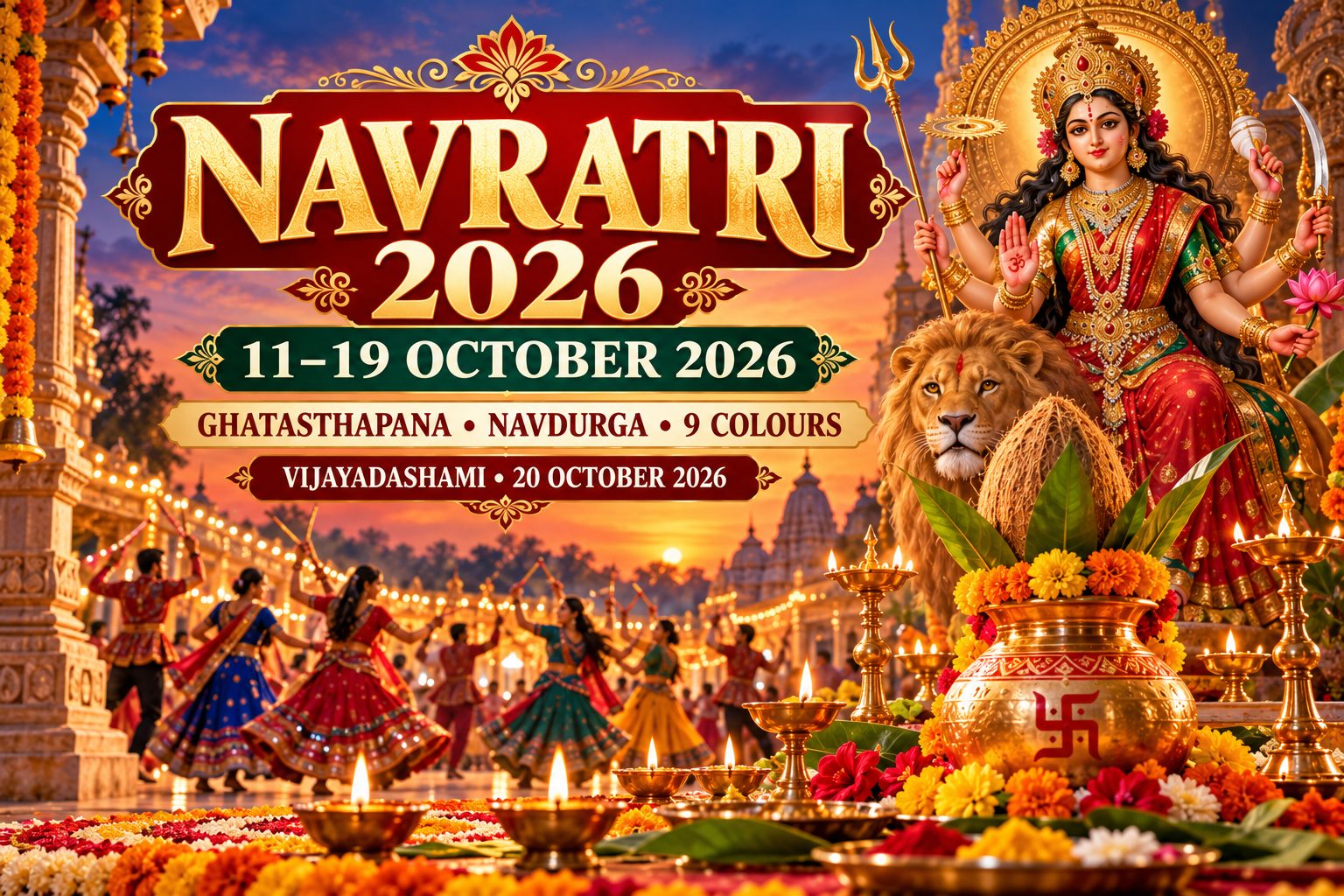
Shardiya Navratri 2026 begins on Sunday, 11 October 2026 with Ghatasthapana and Shailputri Puja. The nine-night festival dedicated to Goddess Durga continues through 19 October, followed by Vijayadashami (Dussehra) on Tuesday, 20 October 2026. Navratri is celebrated across India through Durga worship, fasting, Garba and Dandiya, Golu displays, community celebrations and regional traditions.
Navratri 2026: Key Dates
| Festival | Shardiya Navratri / Sharad Navratri |
| Start Date | Sunday, 11 October 2026 |
| Ghatasthapana | 11 October 2026 |
| Navratri Period | 11–19 October 2026 |
| Durga Ashtami / Maha Navami observances | 19 October 2026 |
| Vijayadashami / Dussehra | Tuesday, 20 October 2026 |
Ghatasthapana Muhurat 2026
Ghatasthapana marks the formal beginning of Shardiya Navratri. For Delhi, published Panchang calculations give the main Ghatasthapana window on 11 October from approximately 6:19 AM to 10:12 AM, with an Abhijit window around 11:44 AM to 12:31 PM. These clock times are location-specific. Chennai, Mumbai, Kolkata and other cities have different sunrise-based timings, so devotees should check a Panchang calculated for their city.
Navratri 2026 Nine Days, Goddess and Colours
| Day | Date | Navdurga | Colour |
|---|---|---|---|
| Day 1 | 11 Oct | Shailputri | Orange |
| Day 2 | 12 Oct | Brahmacharini | White |
| Day 3 | 13 Oct | Chandraghanta | Red |
| Day 4 | 14 Oct | Kushmanda | Royal Blue |
| Day 5 | 15 Oct | Skandamata | Yellow |
| Day 6 | 16 Oct | Katyayani | Green |
| Day 7 | 17 Oct | Kalaratri | Grey |
| Day 8 | 18 Oct | Mahagauri observances begin according to tithi | Purple |
| Day 9 | 19 Oct | Mahagauri / Siddhidatri observances according to tithi | Peacock Green |
The popular Navratri colour sequence is associated with weekdays and is especially followed in western India. Puja-day mapping can be affected by tithi boundaries; in 2026, Ashtami and Navami observances converge on 19 October in widely used Panchang calendars.
Day 1: Shailputri Puja – 11 October
Navratri opens with Ghatasthapana and worship of Goddess Shailputri. The popular colour is orange. Devotees establish a kalash and begin nine days of worship according to family tradition.
Day 2: Brahmacharini Puja – 12 October
The second form of Navdurga is Brahmacharini. White is the associated colour in the 2026 sequence and is commonly linked with purity and peace.
Day 3: Chandraghanta Puja – 13 October
Chandraghanta is worshipped on the third day. Red is the popular colour for the day, symbolising energy and strength in contemporary Navratri colour traditions.
Days 4–6: Kushmanda, Skandamata and Katyayani
From 14 to 16 October, devotees worship Kushmanda, Skandamata and Katyayani. The corresponding popular colours are royal blue, yellow and green. Puja customs, offerings and fasting practices differ across regions and families.
Days 7–9: Kalaratri, Mahagauri and Siddhidatri
The concluding phase honours Kalaratri, Mahagauri and Siddhidatri. The popular colours are grey, purple and peacock green. Panchang tithi boundaries mean major Ashtami and Navami rites can fall together on 19 October in 2026.
Durga Ashtami and Maha Navami 2026
Published 2026 Panchang calendars place important Durga Ashtami and Maha Navami observances on 19 October. Kanya Puja, Sandhi Puja, Homa and other rituals may be performed according to regional traditions and the applicable tithi. Devotees should use local timings for time-sensitive ceremonies.
Vijayadashami and Dussehra 2026
Vijayadashami falls on 20 October 2026. Across India, the day is associated with the victory of good over evil. Celebrations include Dussehra events, Durga Visarjan and region-specific traditions. In Tamil Nadu, Vijayadashami is also an important day for Vidyarambham and the beginning of learning activities for children.
Navratri in Tamil Nadu: Golu and Ayudha Puja
In Tamil Nadu, Navratri is strongly associated with Bommai Golu, where families arrange dolls and figurines on stepped displays and invite relatives and neighbours for visits, devotional music and sundal. The concluding period includes Saraswati Puja, Ayudha Puja and Vijayadashami. Books, musical instruments, tools, vehicles and work equipment may be honoured according to family and workplace traditions.
Navratri Across India
Navratri has distinctive regional expressions. Gujarat is famous for Garba and Dandiya Raas. West Bengal and neighbouring regions celebrate Durga Puja on a grand scale. Maharashtra combines Navratri worship with the nine-colour tradition. Northern India has temple celebrations and Ram Lila traditions leading to Dussehra, while southern states observe Golu, Saraswati worship and Ayudha Puja.
Navratri Fasting Guidance
Fasting practices vary widely. Some devotees avoid grains, onion and garlic; others eat fruits, milk products or permitted vrat foods, while some observe only selected days. People with diabetes, chronic illness, pregnancy, breastfeeding needs, children, older adults and anyone taking medication should prioritise health and seek appropriate medical guidance before strict fasting.
Navratri 2026 Wishes and Messages
“May Maa Durga bless your home with strength, peace, prosperity and happiness. Happy Navratri 2026!”
“May these nine nights of Navratri fill your life with devotion, courage and new beginnings.”
“Wishing you and your family a joyful Shardiya Navratri filled with divine blessings and festive celebrations.”
Frequently Asked Questions
When does Navratri 2026 start?
Shardiya Navratri begins on Sunday, 11 October 2026 with Ghatasthapana and Shailputri Puja.
When does Navratri 2026 end?
The nine-night festival runs through 19 October, followed by Vijayadashami on 20 October 2026.
What is the first Navratri colour in 2026?
Orange is the popular colour for Day 1, Sunday, 11 October 2026.
When is Dussehra 2026?
Vijayadashami or Dussehra falls on Tuesday, 20 October 2026.
Are Ghatasthapana timings the same across India?
No. Muhurat calculations depend on location and sunrise, so devotees should check a local Panchang.
Note: Religious timings and customs vary by city, Panchang tradition and family practice. The colour list is a popular contemporary Navratri tradition and should not be treated as a mandatory religious rule.
Leave a Reply