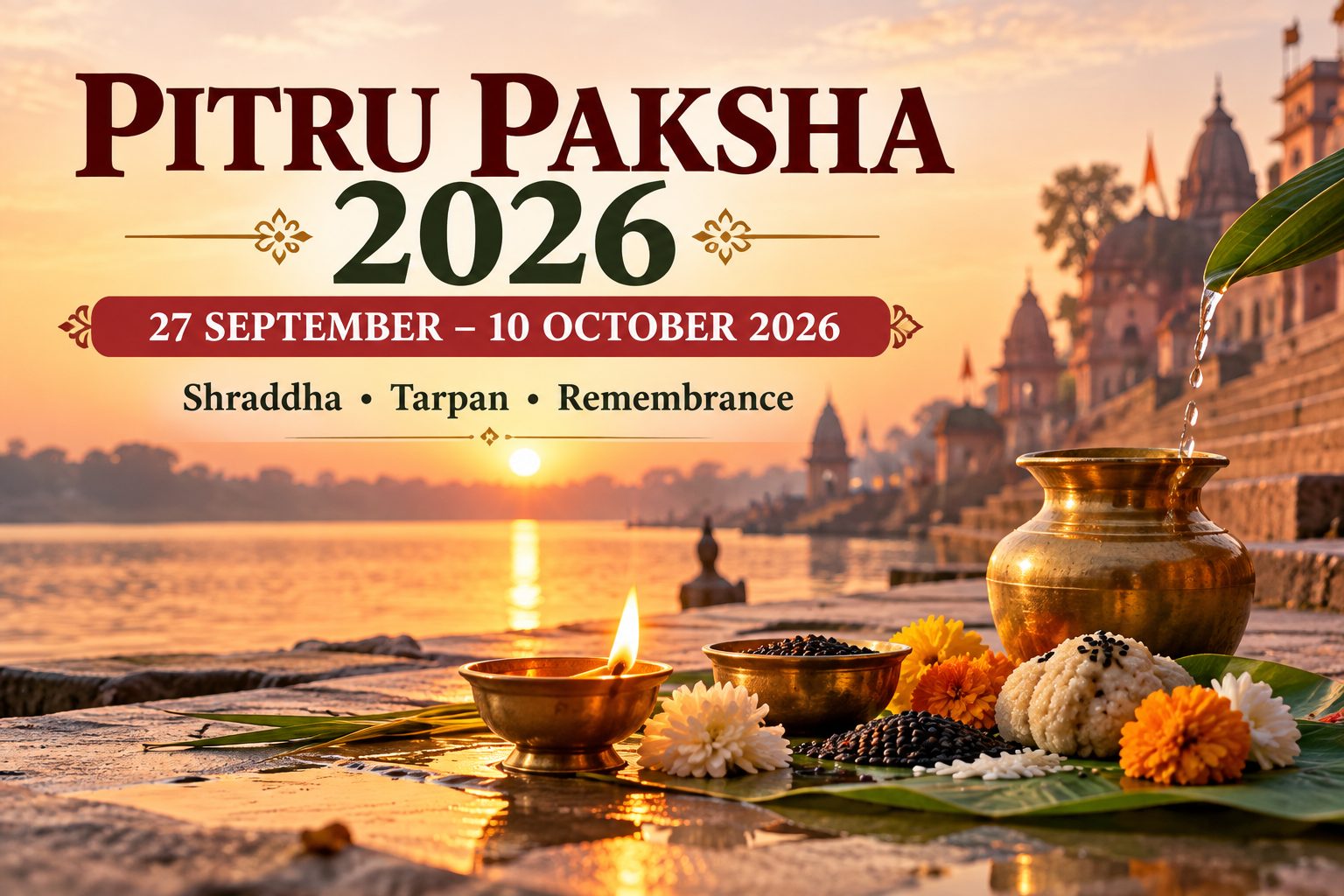
Pitru Paksha 2026 begins on Sunday, 27 September 2026 and concludes on Saturday, 10 October 2026 with Sarva Pitru Amavasya. This sacred period in the Hindu calendar is dedicated to remembering ancestors and performing Shraddha, Tarpan, Pind Daan, charity and other traditional observances. Since lunar tithis can begin and end during a civil day, families should check a reliable local Panchang for exact ritual timings in their city.
Pitru Paksha 2026 Overview
| Occasion | Pitru Paksha / Shraddha Paksha |
| Start Date | 27 September 2026 |
| End Date | 10 October 2026 |
| First Main Shraddha | Pratipada Shraddha |
| Final Observance | Sarva Pitru Amavasya / Mahalaya Amavasya |
| Observed In | India and Hindu communities worldwide |
What is Pitru Paksha?
Pitru Paksha is a period of remembrance in Hindu tradition when families honour deceased ancestors. The observance is associated with gratitude, remembrance and the performance of prescribed ancestral rites. Different families and regions of India may follow different customs, so practices should be understood in the context of local and family traditions.
Pitru Paksha 2026 Shraddha Calendar
The main sequence starts with Pratipada Shraddha on 27 September and concludes with Sarva Pitru Amavasya on 10 October. Individual Shraddha is traditionally observed according to the lunar tithi associated with the ancestor. Some Gregorian dates can contain more than one relevant tithi because Hindu lunar dates do not always align exactly with midnight-to-midnight calendar days.
Important Rituals and Traditions
Common observances include Shraddha, Tarpan and Pind Daan. Families may also offer food, make charitable donations and feed people or animals according to their tradition. The purpose is remembrance and expression of respect and gratitude toward ancestors. Ritual methods vary significantly across regions and communities, and devotees commonly seek guidance from their family priest or local Panchang for the appropriate procedure.
Sarva Pitru Amavasya 2026
Sarva Pitru Amavasya falls on 10 October 2026 and marks the conclusion of Pitru Paksha. It is especially significant for families who may not know an ancestor’s exact death tithi or who could not perform the corresponding Shraddha earlier in the fortnight. It is also widely known as Mahalaya Amavasya.
Pitru Paksha in Different Parts of India
Practices differ across India. Places such as Gaya, Prayagraj, Varanasi, Haridwar and other pilgrimage centres are traditionally associated with ancestral rites. In Tamil Nadu and other southern states, families may use regional names, procedures and Panchang calculations. Readers should therefore avoid treating a single city’s muhurat as applicable throughout India.
Things to Remember During Pitru Paksha
- Confirm the correct Shraddha tithi for the ancestor.
- Check local Panchang timings because they vary by location.
- Follow family and regional traditions where applicable.
- Approach rituals with simplicity, remembrance and respect.
- For specific religious procedures, consult a knowledgeable local priest.
Pitru Paksha 2026 Messages
“May the memories and blessings of our ancestors continue to guide our family with wisdom and strength.”
“On Pitru Paksha, we remember our ancestors with gratitude, respect and heartfelt prayers.”
“May this sacred period inspire us to honour our roots and preserve the values passed down through generations.”
Frequently Asked Questions
When does Pitru Paksha 2026 start?
The main Pitru Paksha Shraddha sequence begins on Sunday, 27 September 2026.
When does Pitru Paksha 2026 end?
It concludes on Saturday, 10 October 2026 with Sarva Pitru Amavasya.
What is Sarva Pitru Amavasya?
It is the concluding Amavasya of Pitru Paksha and is traditionally important for performing ancestral rites, including where the exact death tithi is unknown.
Are Pitru Paksha timings the same throughout India?
No. Tithi and ritual timings depend on location and Panchang calculations. Check timings for your city before planning a ritual.
Note: This article is for general informational purposes. Religious customs and Panchang timings can vary by location, tradition and family practice.
Leave a Reply