Valmiki Jayanti 2026: Date, History, Significance, Wishes & Speech
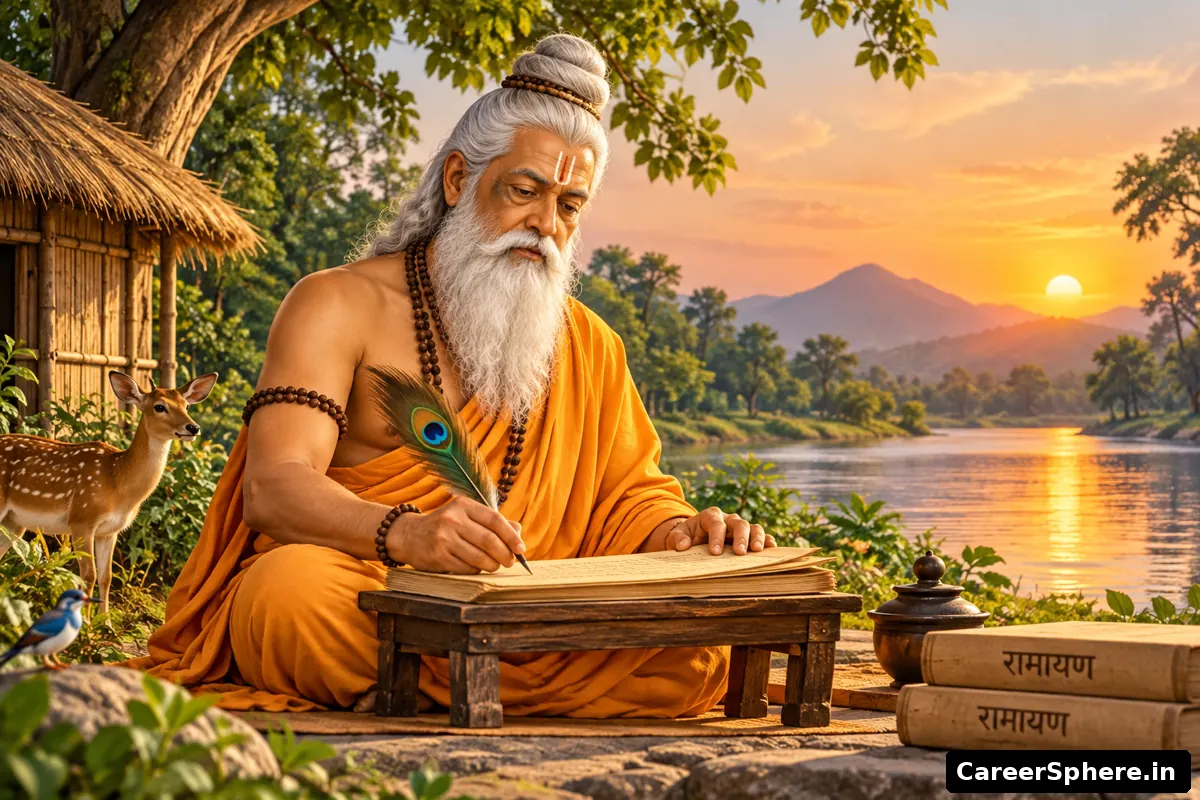
Valmiki Jayanti 2026, also known as Maharishi Valmiki Jayanti or Valmiki Jayanthi, celebrates the birth anniversary of Maharishi Valmiki, traditionally revered as the author of the Sanskrit epic Ramayana. The observance falls on the full-moon day of the Hindu lunar month of Ashwin.
Across India, devotees mark the occasion with prayers, processions, readings from the Ramayana, devotional programmes and community service. Maharishi Valmiki is honoured in Indian literary and religious tradition as the Adi Kavi, meaning the first poet.
Valmiki Jayanti 2026: Quick Facts
| Festival | Valmiki Jayanti / Maharishi Valmiki Jayanti |
| Occasion | Birth anniversary of Maharishi Valmiki |
| Traditional date | Ashwin Purnima |
| Also known as | Valmiki Jayanthi, Maharishi Valmiki Jayanti |
| Valmiki is known as | Adi Kavi |
| Associated work | Ramayana |
| Common observances | Prayer, Ramayana recitation, processions and community programmes |
Who Was Maharishi Valmiki?
Maharishi Valmiki occupies an important place in India’s literary and religious traditions. He is traditionally credited with composing the Sanskrit Ramayana, one of India’s great epics. The work narrates the story of Rama, Sita, Lakshmana, Hanuman and other figures and has influenced literature, performance, art and devotional traditions across South and Southeast Asia.
Valmiki is widely called Adi Kavi, or the first poet, and the Ramayana is traditionally described as the Adi Kavya, the first great Sanskrit poem.
Why Is Valmiki Jayanti Celebrated?
Valmiki Jayanti commemorates Maharishi Valmiki and his contribution to the Ramayana tradition. For devotees, it is also a day for reflection on values associated with the epic, including duty, courage, compassion, loyalty and ethical conduct.
Celebrations vary by region and community. Temples and organisations may conduct special worship, recitations, cultural programmes, charitable activities and public processions.
Valmiki Jayanti 2026 Date and Tithi
Valmiki Jayanti is observed on Ashwin Purnima, the full-moon day in the Hindu month of Ashwin. Because Hindu festival dates are determined through the lunar calendar and local panchang calculations, readers should verify the exact 2026 civil date and Purnima timings with a reliable local calendar or temple before planning rituals.
The same full-moon period is also associated with Sharad Purnima in many parts of India. CareerSphere avoids publishing unverified tithi timings because start and end times can depend on location and calendar convention.
Maharishi Valmiki and the Ramayana
The Ramayana attributed to Valmiki is a foundational Sanskrit epic. Traditionally organised into kandas, or books, it tells the story of Rama’s life, exile, Sita’s abduction, the search for her, the conflict in Lanka and Rama’s eventual return.
Over centuries, the story has inspired numerous retellings in Indian languages and beyond. These versions may differ in narrative details, theological emphasis and local tradition, so it is useful to distinguish the Sanskrit Valmiki Ramayana from later regional adaptations.
Why Is Valmiki Called Adi Kavi?
Indian literary tradition honours Valmiki as Adi Kavi, meaning the first poet. A well-known traditional account links the origin of Sanskrit poetic verse to Valmiki witnessing a hunter kill one of a pair of krauncha birds. His grief is said to have emerged in metrical form.
This episode is traditionally associated with the birth of the shloka poetic metre and contributes to Valmiki’s status in Sanskrit literary history.
The Traditional Story of Valmiki’s Transformation
Popular devotional traditions tell a transformation story in which a man often called Ratnakara abandons a life of wrongdoing after spiritual reflection and becomes the sage Valmiki. The story is frequently used to illustrate the possibility of personal transformation.
It is important to distinguish devotional tradition from independently established biography. Details about Valmiki’s historical life are difficult to date with certainty, and different traditions preserve different accounts.
Valmiki’s Ashram in the Ramayana Tradition
In the Ramayana tradition, Valmiki’s hermitage is closely associated with Sita during a later period of her life and with her sons Lava and Kusha. The twins are traditionally described as learning and reciting the Ramayana.
This narrative reinforces Valmiki’s image not only as a poet but also as a teacher and sage.
How Is Valmiki Jayanti Celebrated?
Observances differ across India. Devotees may visit temples dedicated to Maharishi Valmiki, offer prayers and participate in Ramayana recitations. Community organisations may arrange processions, devotional music, speeches and programmes about Valmiki’s literary legacy.
Charitable service, food distribution and educational activities are also organised in some places. Families may observe the day more simply through prayer and reading passages from the Ramayana.
Valmiki Jayanti 2026 Celebration Ideas
- Read a selected passage from the Valmiki Ramayana or a reliable translation.
- Learn about the different regional Ramayana traditions of India.
- Organise a school presentation on Maharishi Valmiki and Sanskrit literature.
- Hold a storytelling session for children based on age-appropriate Ramayana episodes.
- Create posters explaining the terms Adi Kavi and Adi Kavya.
- Participate in a community-service or food-distribution programme.
- Visit a Valmiki temple or cultural programme where appropriate.
- Conduct a quiz on the Ramayana and Indian epic literature.
Valmiki Jayanti Activities for Schools
Schools can approach the occasion as both a cultural and literary learning opportunity. Students can prepare timelines, book displays, speeches, essays or presentations on the Ramayana’s influence on Indian languages and arts.
Teachers can also compare how one episode has been retold in different literary traditions. This helps students understand that major epics often have rich histories of interpretation rather than a single modern form.
Valmiki Jayanti 2026 Wishes
- May the wisdom associated with Maharishi Valmiki inspire us towards knowledge, compassion and righteous conduct. Happy Valmiki Jayanti 2026!
- Warm wishes on Maharishi Valmiki Jayanti. May this day inspire learning, reflection and kindness.
- Happy Valmiki Jayanti! Let us remember the literary legacy of the Adi Kavi and the timeless influence of the Ramayana.
- May Maharishi Valmiki’s teachings inspire strength, wisdom and good deeds in our lives.
- Wishing you and your family peace and happiness on Valmiki Jayanti 2026.
- On Valmiki Jayanti, let us celebrate knowledge, poetry and the power of positive transformation.
Valmiki Jayanti Messages and WhatsApp Status
- 🙏 Happy Maharishi Valmiki Jayanti 2026!
- Remembering the Adi Kavi and his enduring literary legacy.
- May wisdom guide our words and compassion guide our actions.
- Valmiki Jayanti: a celebration of literature, learning and reflection.
- Honouring Maharishi Valmiki, traditionally revered as the poet of the Ramayana.
- Knowledge can transform lives. Happy Valmiki Jayanti!
Valmiki Jayanti Quotes and Thought Lines
For social posts and school displays, it is safer to use original thought lines rather than circulating internet quotations that are incorrectly attributed to Valmiki:
- “Let knowledge shape your words and compassion shape your actions.”
- “Great stories survive because every generation finds meaning in them.”
- “Transformation begins when reflection becomes action.”
- “Literature connects generations through memory, values and imagination.”
- “Wisdom becomes meaningful when it guides everyday conduct.”
Valmiki Jayanti Speech in English
Good morning everyone. Today we have gathered to observe Maharishi Valmiki Jayanti, the birth anniversary of the sage traditionally revered as the author of the Sanskrit Ramayana.
Maharishi Valmiki is honoured as Adi Kavi, or the first poet. The Ramayana associated with him has influenced Indian literature, art, theatre, music and religious traditions for centuries. Its stories have been retold in many languages and cultures.
Valmiki Jayanti gives us an opportunity to learn about this literary heritage and reflect on values such as courage, duty, compassion and the possibility of personal transformation. Let us celebrate the day by reading, learning and treating others with respect. Thank you.
10 Lines on Maharishi Valmiki Jayanti
- Valmiki Jayanti celebrates Maharishi Valmiki.
- It is traditionally observed on Ashwin Purnima.
- Valmiki is revered as the author of the Sanskrit Ramayana.
- He is known as Adi Kavi, meaning the first poet.
- The Ramayana is one of India’s great epics.
- Valmiki’s literary legacy has influenced generations of writers and artists.
- Devotees may offer prayers and read the Ramayana.
- Processions and cultural programmes are organised in some places.
- Schools can conduct speeches, essays and quizzes about Valmiki.
- The occasion celebrates literature, reflection and cultural heritage.
Valmiki Jayanti Essay
Maharishi Valmiki Jayanti is an important cultural and religious observance in India. It commemorates the sage Valmiki, traditionally credited with composing the Sanskrit Ramayana. He is honoured as Adi Kavi because of his special place in Sanskrit poetic tradition.
The Ramayana has influenced Indian civilisation in many ways. Its stories appear in literature, theatre, dance, painting, sculpture and popular culture. Different regions have developed their own Ramayana traditions, demonstrating the extraordinary reach of the epic.
On Valmiki Jayanti, devotees visit temples, participate in prayers and listen to Ramayana recitations. Educational institutions may conduct cultural programmes and competitions. The occasion can encourage students to explore classical literature and understand how stories travel across languages and generations.
Valmiki Jayanti is therefore not only a devotional occasion but also an opportunity to appreciate India’s literary heritage.
Valmiki Jayanti GK Questions and Answers
Who is Maharishi Valmiki?
He is the sage traditionally revered as the author of the Sanskrit Ramayana.
What title is given to Valmiki?
Adi Kavi, meaning the first poet.
On which Hindu tithi is Valmiki Jayanti observed?
Ashwin Purnima.
Which epic is associated with Maharishi Valmiki?
The Ramayana.
Who are Lava and Kusha in the Ramayana tradition?
They are the twin sons of Rama and Sita and are closely associated with Valmiki’s hermitage in the traditional narrative.
Frequently Asked Questions
Is Valmiki Jayanti the birthday of Maharishi Valmiki?
It is traditionally celebrated as his birth anniversary.
What is another name for Valmiki Jayanti?
It is also called Maharishi Valmiki Jayanti or Valmiki Jayanthi.
Why is Valmiki important in Indian literature?
He is traditionally credited with the Sanskrit Ramayana and is revered as Adi Kavi.
How can children celebrate Valmiki Jayanti?
They can read age-appropriate Ramayana stories, prepare speeches, join quizzes and learn about India’s epic literary traditions.
Are all quotes online attributed to Valmiki authentic?
No. Many modern motivational lines circulate with unsupported attributions. When accuracy matters, consult a recognised translation or scholarly edition of the Valmiki Ramayana.
Is Valmiki Jayanti connected with Sharad Purnima?
Both are associated with the Ashwin full-moon period in many calendars, although their religious meanings and observances are distinct.
Related October 2026 Festivals and Important Days
Readers planning for the Ashwin full-moon period can also read our Sharad Purnima 2026 guide. For more October observances, see Gandhi Jayanti 2026 and our World Teachers’ Day 2026 guide.
Simple Valmiki Jayanti 2026 Checklist
Use this short plan to turn the information above into a practical celebration or school programme:
- Confirm the local calendar: check the Ashwin Purnima date and tithi timing from a trusted temple or panchang used in your location.
- Select reading material: choose a recognised Ramayana edition, translation or age-appropriate retelling before the programme.
- Prepare the programme: select a speech, essay topic, quiz questions or one of the original greetings on this page according to your audience.
- Plan a learning activity: ask students to explain Adi Kavi, identify the Ramayana’s principal characters or compare regional retellings.
- Add community participation: where appropriate, join a cultural event, reading session or voluntary community-service activity.
- Check attributions: before sharing a quotation online, verify that it actually appears in a recognised source rather than relying on an unattributed social-media graphic.
Example 30-Minute School Programme
A simple programme can begin with a two-minute introduction, followed by a five-minute speech on Maharishi Valmiki, a ten-minute Ramayana storytelling session, a five-minute GK quiz and a short student reflection. Teachers can conclude by asking students what they learned about literature, oral tradition and the way epics are retold across languages.
What to Prepare the Previous Day
Keep the selected reading, speaker notes, quiz sheet and display material ready. Verify spellings of names and avoid using quotations with uncertain attribution. For a classroom display, a timeline of the Ramayana’s literary influence, a map of major regional retellings and a short explanation of the term Adi Kavi can make the activity more informative.
Ready-to-Use Student Activity
Give students three simple tasks: write two sentences explaining why Valmiki is called Adi Kavi, name three ways the Ramayana has influenced Indian culture, and create one original Valmiki Jayanti message without copying an online quotation. Students can then exchange their answers and check whether each statement is factual, clearly worded and respectfully presented.
After the Programme
Ask participants to write one thing they learned and one question they still have. Teachers can use those responses for a follow-up reading activity on Sanskrit literature, regional Ramayana traditions or Indian epic storytelling. This makes the observance a starting point for further learning rather than only a one-day event.
Ideas for Valmiki Jayanti 2026
Valmiki Jayanti can be observed through activities that combine literary learning, cultural history and reflection. Schools may introduce students to the Ramayana as an important work of Indian literary and cultural tradition, while also explaining that different communities and traditions interpret its stories in different ways. A balanced programme can focus on literature, language, storytelling and the historical place of Valmiki in Indian tradition without turning a classroom activity into a religious test.
Students can prepare a short biography, create a timeline, compare retellings, or discuss how oral and written traditions preserve stories across generations. Libraries can arrange a display of editions and translations, and colleges can conduct talks on Sanskrit literature, Indian literary history and the continuing influence of the Valmiki tradition.
Wishes and Messages: Keep Them Respectful
Messages for Valmiki Jayanti work best when they focus on learning, literature, values and cultural heritage. Avoid attributing quotations to Valmiki unless the wording can be verified from a reliable text or scholarly source. For public posts, a simple greeting combined with a factual line about the observance is often more useful than an unverified quotation.
Related CareerSphere Guides
For more cultural and awareness content, explore World Development Information Day 2026, World Teachers’ Day 2026 and World Space Week 2026.
Conclusion
Valmiki Jayanti 2026 honours Maharishi Valmiki and the extraordinary literary tradition associated with the Ramayana. From the title Adi Kavi to the continuing influence of the epic across languages and art forms, Valmiki’s place in Indian cultural history remains significant.
The occasion can be observed through prayer, reading, cultural programmes, education and community service. Above all, it provides an opportunity to explore one of India’s foundational literary traditions with curiosity and respect.
Leave a Reply