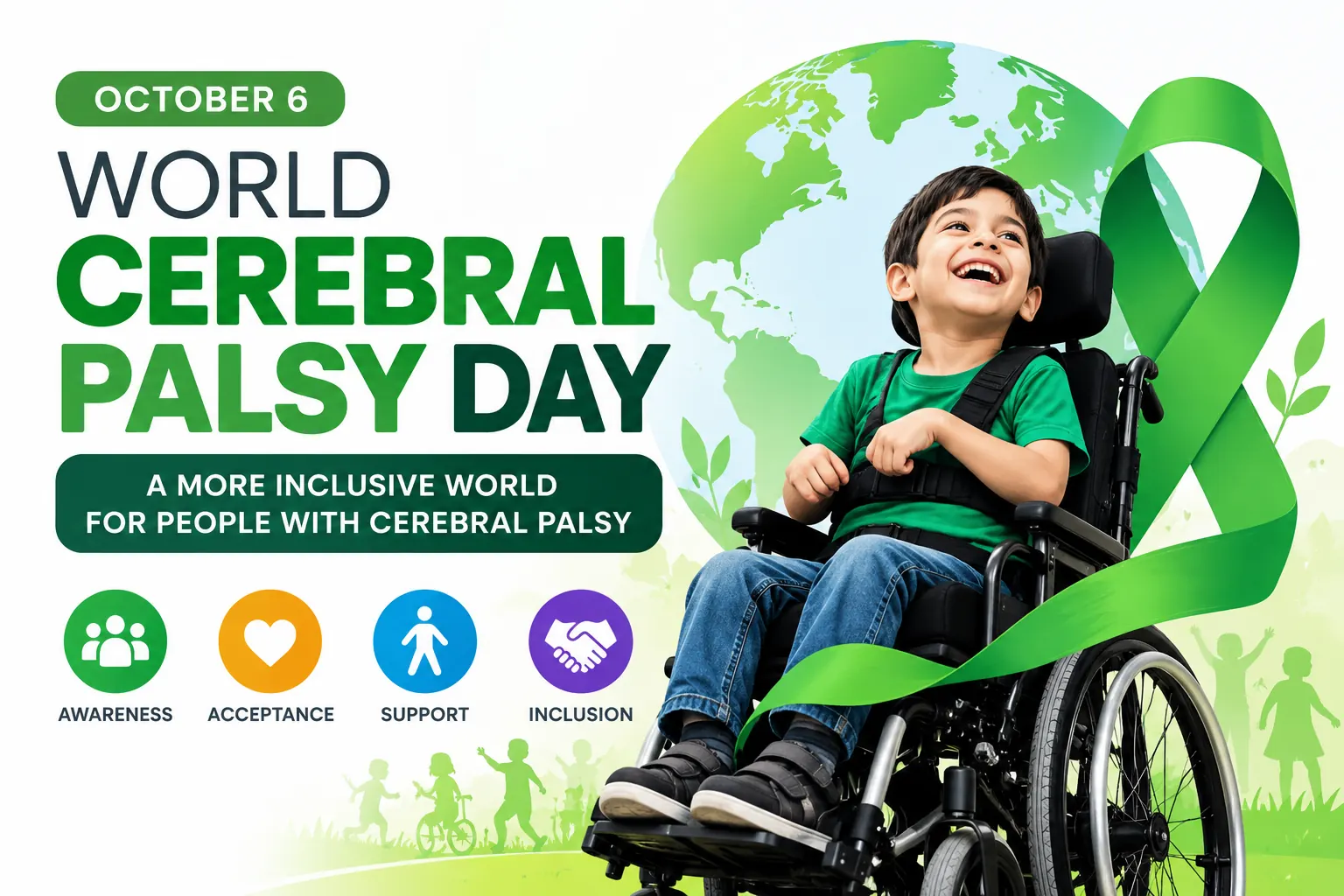
World Cerebral Palsy Day 2026 will be observed on Tuesday, October 6, 2026. The global World CP Day movement is centred on #UniqueANDUnited, celebrating the individuality of people with cerebral palsy while bringing their voices together to call for a more inclusive world.
The official campaign says more than 50 million people worldwide live with cerebral palsy, with an estimated 350 million parents, caregivers and family members directly affected. For World CP Day, people are being encouraged to identify one change they want to see, share it publicly and tag a local leader, business or community organisation that could help make it happen.
World Cerebral Palsy Day 2026: Key Details
| Date | October 6, 2026 |
| Day | Tuesday |
| Campaign | #UniqueANDUnited |
| Global community | 50+ million people living with cerebral palsy |
| Main call to action | Share the change you want to see and tag someone who can help |
| Official hashtags | #WorldCPDay and #UniqueANDUnited |
What is the World Cerebral Palsy Day 2026 campaign?
The official campaign describes #UniqueANDUnited as recognising that every person with cerebral palsy has different experiences, priorities and ideas about what needs to change. At the same time, bringing those individual voices together can create a stronger collective call for inclusion.
The campaign asks participants to begin with a simple question: “What’s your change?” That change could relate to education, employment, sport, accessibility, support, technology, representation or participation in decisions. Participants can then share their change and tag an organisation or person with the ability to help make progress.
How to take part in World CP Day 2026
The official action guide sets out three straightforward steps. First, choose one change you want to see for people with cerebral palsy. Second, share that change, beginning with “My change is…” and using #UniqueANDUnited. Third, tag a local leader, business or community organisation that may be able to help. Participants can also tag the official World CP Day account.
This approach turns awareness into a specific request for action rather than limiting participation to a symbolic social-media post.
What is cerebral palsy?
Cerebral palsy is described by the World CP Day organisation as the most common lifelong physical disability. It can affect a person’s movement, walking or communication and results from an injury to the developing brain. Importantly, cerebral palsy affects people differently: some people may require substantial lifelong support while others live independently.
Because experiences vary widely, the campaign stresses individuality rather than assumptions. A diagnosis alone does not describe a person’s abilities, ambitions, communication, education, work or support needs.
Celebration, not sympathy
The official World CP Day movement sets out four principles: celebration rather than sympathy, solidarity rather than stereotypes, individuality rather than assumptions, and a focus on strengths rather than weaknesses. These principles are useful for schools, workplaces, media organisations and individuals preparing World CP Day content.
Respectful awareness avoids portraying disabled people only through pity or inspiration. Instead, it recognises people with cerebral palsy as students, professionals, creators, athletes, entrepreneurs, family members, leaders and community participants with different lives and goals.
Why World Cerebral Palsy Day matters
The official movement says people with cerebral palsy can face barriers involving healthcare, education, social inclusion and employment. World CP Day exists to increase awareness while pushing for changes in attitudes, policies and systems.
Accessibility is not only about physical buildings. It can include accessible recruitment, communication, technology, education, transport and opportunities to participate in decisions. What helps one person may not be the right solution for another, which is why listening to people with lived experience is central to the campaign.
World CP Day and inclusive workplaces
The 2026 campaign highlights employment as one area where change may be needed. The official campaign notes that people with cerebral palsy bring skills, ideas, experience and ambitions to work, and calls for accessible recruitment, inclusive workplaces and equal opportunities to lead and succeed.
Employers can review whether recruitment systems, interviews, digital tools and workplaces unnecessarily exclude candidates. The most useful approach is to ask individuals what reasonable support or accessibility they need rather than making assumptions based on a diagnosis.
Education and cerebral palsy inclusion
Schools and colleges can use October 6 to discuss disability inclusion in ways that respect students with cerebral palsy. Accessible learning environments may involve physical access, assistive technology, communication support, flexible learning arrangements or other individual accommodations.
Teachers should avoid presenting classmates with cerebral palsy as objects of sympathy. Inclusive education means recognising the same right to participate, learn, build friendships and pursue ambitions while providing appropriate support where required.
Representation in media and public life
The World CP Day campaign also features calls for authentic representation in mainstream fashion and media—not only when disability itself is the subject. Representation can influence expectations about who belongs in workplaces, advertising, entertainment, leadership and public life.
Authenticity matters. Organisations creating content should involve people with cerebral palsy and avoid relying on stereotypes. Personal stories are most valuable when individuals retain control over how their experiences are presented.
History of World Cerebral Palsy Day
The official organisation says World CP Day was founded in 2012 by Cerebral Palsy Alliance in Australia and United Cerebral Palsy in the United States, bringing together individuals and organisations from more than 100 countries. The inaugural “Change my World” campaign invited people with cerebral palsy to submit ideas for improving lives; the winning idea was a solar-powered wheelchair.
The movement subsequently developed into a broader international platform for awareness, representation and action.
50 million voices, 50 million reasons for change
The campaign’s central message emphasises scale without treating people as a single group. More than 50 million people living with cerebral palsy means millions of different experiences and priorities. The #UniqueANDUnited message is built around that combination of individuality and collective action.
World Cerebral Palsy Day 2026 activities for schools
Schools can organise an accessibility audit, student discussion, poster activity or inclusive-sport session designed with appropriate guidance. Older students could examine barriers in public spaces or digital services and propose practical improvements.
Any activity involving a student with cerebral palsy should respect that student’s preferences and privacy. No student should be expected to become a spokesperson simply because of a disability.
Ideas for colleges and workplaces
Colleges can hold discussions about accessible technology, inclusive design and employment. Workplaces can review recruitment and workplace accessibility or invite disability-led organisations to provide training. Organisations can also use the campaign’s “My change is…” format to identify a specific improvement they can realistically implement.
World Cerebral Palsy Day 2026 messages
- Every person with cerebral palsy has a unique story, voice and ambition. This World CP Day, let’s listen and act.
- Unique in our experiences, united in our call for inclusion. World Cerebral Palsy Day 2026.
- Accessibility creates opportunity. Inclusion makes communities stronger.
- Celebrate individuality, challenge assumptions and help turn ideas for change into action.
- 50 million voices. 50 million reasons for change. #WorldCPDay #UniqueANDUnited
World CP Day 2026 slogans
- Unique voices, united for change.
- Access. Inclusion. Opportunity.
- Nothing about inclusion without lived experience.
- Different journeys, equal rights.
- See strengths, remove barriers.
Official resources
World Cerebral Palsy Day: Official World CP Day website
Get involved: Official participation guide
Campaign resources: World CP Day resources
Frequently Asked Questions
When is World Cerebral Palsy Day 2026?
World Cerebral Palsy Day is observed every year on October 6. In 2026, it falls on Tuesday.
What is the 2026 World CP Day campaign?
The current global campaign uses #UniqueANDUnited, highlighting individual experiences while bringing voices together for change.
How many people live with cerebral palsy worldwide?
The official World CP Day movement estimates that more than 50 million people worldwide live with cerebral palsy.
How can I participate?
Choose one change you want to see, share it using #UniqueANDUnited and tag a local leader, business or community organisation that could help.
What hashtags should I use?
The official campaign promotes #WorldCPDay and #UniqueANDUnited.
When did World CP Day begin?
The official history dates the movement to 2012.
What is the campaign’s approach?
It emphasises celebration rather than sympathy, solidarity rather than stereotypes, individuality rather than assumptions and strengths rather than weaknesses.
Final thoughts
World Cerebral Palsy Day 2026 on October 6 is built around the idea that meaningful inclusion starts by listening to people with cerebral palsy themselves. #UniqueANDUnited recognises that no single story represents everyone. By identifying practical changes in education, employment, accessibility, technology, representation and community life, participants can turn awareness into action.
Leave a Reply