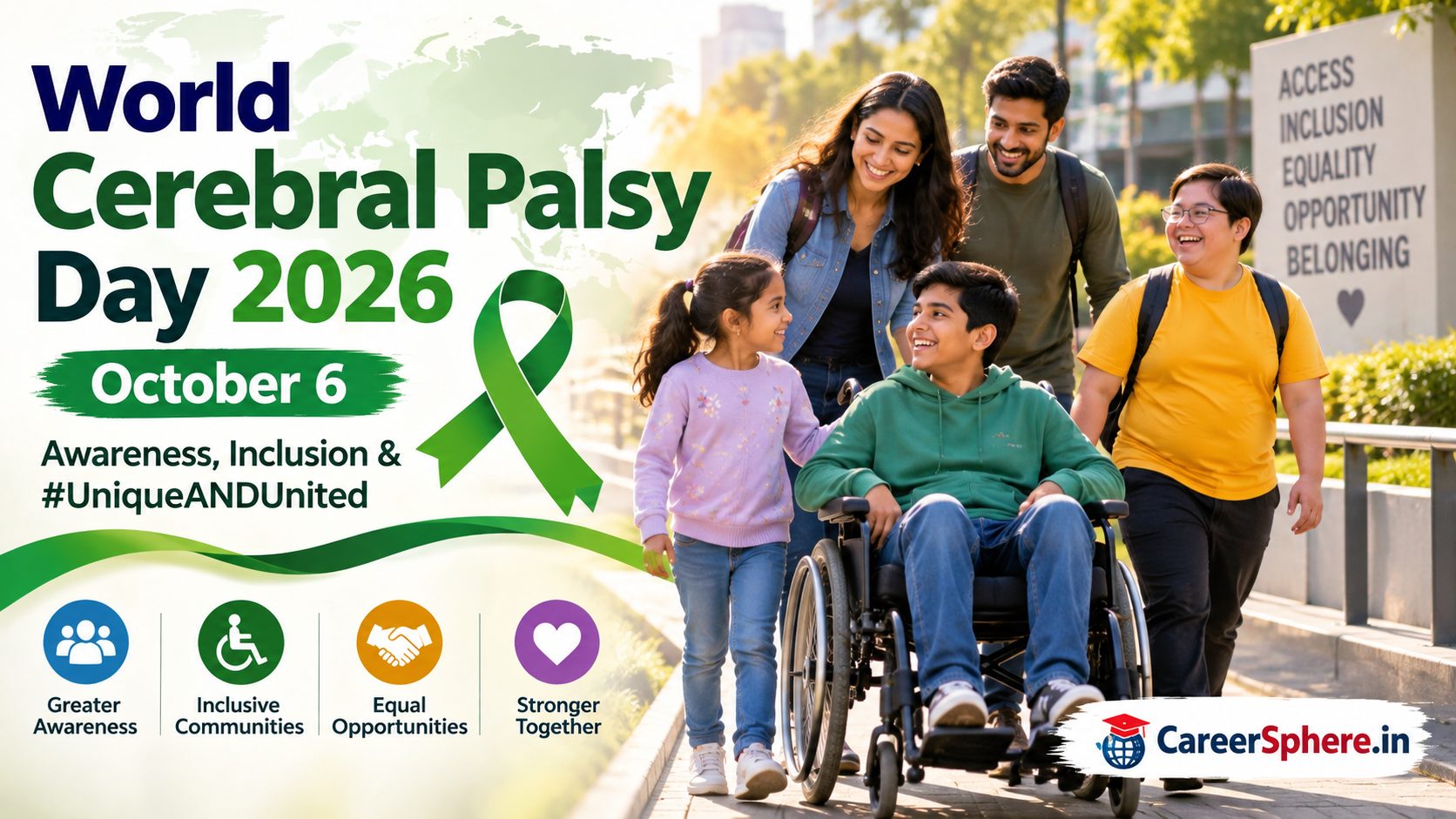
World Cerebral Palsy Day 2026: October 6, History, Significance & #UniqueANDUnited
World Cerebral Palsy Day 2026 will be observed on October 6, bringing attention to people living with cerebral palsy, their families, supporters and the importance of inclusion, accessibility and equal opportunity. The 2026 campaign on the official World CP Day platform uses the theme #UniqueANDUnited, encouraging people to share the changes they want to see and connect those ideas with people or organisations that can help make them happen.
World Cerebral Palsy Day 2026: Quick Facts
| Particular | Details |
|---|---|
| Day | World Cerebral Palsy Day |
| Date | October 6, 2026 |
| 2026 weekday | Tuesday |
| Focus | Awareness, inclusion, accessibility and participation |
| 2026 campaign | #UniqueANDUnited |
| Global movement | Led by and for the cerebral palsy community, families and supporters |
When Is World Cerebral Palsy Day 2026?
World Cerebral Palsy Day 2026 is on Tuesday, October 6, 2026. The observance takes place every year on October 6. It is a global awareness and advocacy movement rather than a public holiday.
The day creates an opportunity to learn about cerebral palsy, listen to people with lived experience, recognise achievements and consider how communities can become more accessible and inclusive.
What Is World Cerebral Palsy Day?
World Cerebral Palsy Day is a worldwide movement focused on the lives, experiences and rights of people with cerebral palsy. The official campaign describes the movement as being for and by the global cerebral palsy community, their families and supporters.
Its emphasis is broader than awareness alone. Campaign activities can highlight accessibility, education, employment, healthcare, assistive technology, participation, representation and the removal of barriers that can prevent people from taking part fully in community life.
What Is Cerebral Palsy?
Cerebral palsy is a group of lifelong conditions associated with movement, posture and coordination. It results from injury or differences affecting the developing brain, and the way it affects a person can vary considerably.
Some people with cerebral palsy may need significant assistance in daily activities, while others live independently. Communication, mobility, learning and other experiences can also differ from person to person. For this reason, it is important not to assume that one person’s experience represents everyone with cerebral palsy.
This article is intended for general awareness. Individual medical, rehabilitation or assistive-technology decisions should be discussed with appropriately qualified professionals.
Why Is World Cerebral Palsy Day Important?
The observance helps bring public attention to barriers that people with cerebral palsy may encounter in everyday life. These can include inaccessible buildings and transport, limited access to services, communication barriers, unequal educational opportunities and difficulties entering or remaining in employment.
It also creates space to recognise achievements rather than presenting disability only through limitations. The official World CP Day movement emphasises individuality, strengths, participation and the voices of people with cerebral palsy.
World Cerebral Palsy Day 2026 Theme: #UniqueANDUnited
The 2026 campaign uses #UniqueANDUnited. The message recognises that every person with cerebral palsy has individual experiences, priorities and ideas, while the wider community can come together around common goals.
The campaign invites people to identify a change they want to see, share it and connect with a local leader, business or community organisation that could help turn that idea into action.
| Campaign idea | What it means |
|---|---|
| Unique | Every person’s experience and priorities are different. |
| United | People can work together to create more inclusive communities. |
| Voice | People with cerebral palsy should be heard in decisions affecting their lives. |
| Action | Awareness can be connected with practical changes in communities. |
World Cerebral Palsy Day History
World Cerebral Palsy Day developed as an international movement connecting people with cerebral palsy, families, service organisations, researchers and supporters. The campaign has evolved over time from a focus on ideas and innovation into a broader movement addressing the different issues affecting people with cerebral palsy around the world.
The movement’s history includes campaigns that invited the global community to suggest ideas for technologies and products that could improve everyday life. Over the years, its focus expanded toward participation, inclusion and action across multiple areas of society.
World Cerebral Palsy Day and Inclusion
Inclusion means more than allowing someone to enter a building or attend an event. It also involves ensuring that people can participate meaningfully. Accessible communication, suitable transport, inclusive education, employment opportunities and appropriate support can all influence participation.
Schools, workplaces, public institutions, businesses and community organisations can examine whether their spaces and practices are accessible. Small changes can sometimes remove practical barriers, while larger improvements may require investment, policy changes or specialist planning.
Accessibility and Everyday Life
Accessibility can involve physical, digital and communication environments. Examples include step-free access, accessible toilets, appropriate seating, clear signage, accessible websites, captions, alternative communication methods and staff who understand how to provide assistance respectfully.
Accessibility should be considered at the planning stage rather than treated only as an afterthought. People with disabilities can also be involved in designing and testing services because lived experience can identify barriers that may not be obvious to others.
Education and Cerebral Palsy
Inclusive education aims to ensure that students with disabilities can participate in learning alongside their peers with appropriate support. Depending on an individual’s needs, support can involve accessible classrooms, assistive technology, communication support, adapted learning materials or changes to the physical environment.
Schools can mark World Cerebral Palsy Day by learning about disability inclusion, listening to students and families, reviewing accessibility and celebrating the achievements and contributions of people with disabilities.
Employment and Equal Opportunity
Employment is another important part of inclusion. A workplace can improve participation by focusing on skills and reasonable accessibility needs rather than assumptions about what a person can or cannot do.
Accessible recruitment information, inclusive interviews, suitable workplace adjustments and flexible arrangements where appropriate can help remove barriers. The specific support required varies from person to person.
Assistive Technology and Innovation
Assistive technology can support mobility, communication, education, work and everyday activities. The right technology depends on the individual’s needs and circumstances.
World Cerebral Palsy Day has a history of highlighting innovation and ideas generated by the cerebral palsy community. The broader lesson is that technology development is most useful when it responds to real needs and includes people with lived experience in the design process.
World Cerebral Palsy Day in India
World Cerebral Palsy Day is relevant in India because disability inclusion involves schools, healthcare services, families, workplaces, public infrastructure and community organisations. The National Trust, an Indian government statutory body under the Ministry of Social Justice and Empowerment, has announced a national meet connected with World Cerebral Palsy Day on October 6, 2026.
Across India, awareness activities can provide opportunities to discuss accessibility, inclusive education, rehabilitation, assistive devices, employment and the participation of people with disabilities in community life.
How Schools Can Observe World Cerebral Palsy Day
- Conduct a short awareness session about cerebral palsy and disability inclusion.
- Invite students to discuss respectful and inclusive language.
- Review whether classrooms, entrances and toilets are accessible.
- Explore how assistive technology can support learning and communication.
- Celebrate achievements and contributions of people with disabilities.
- Encourage students to identify one practical accessibility improvement for their school.
How Workplaces Can Support Inclusion
- Review physical access to entrances, work areas and common facilities.
- Check whether digital information and internal systems are accessible.
- Use inclusive recruitment and interview practices.
- Ask employees about accessibility needs rather than making assumptions.
- Provide appropriate workplace adjustments where required and feasible.
- Include disability awareness in broader workplace inclusion efforts.
How Individuals Can Participate
People do not need to organise a large event to participate meaningfully. The 2026 campaign encourages people to identify a change they would like to see and connect that idea with someone who can help.
- Learn about cerebral palsy from reliable disability-led organisations.
- Listen to people with cerebral palsy and respect their individual experiences.
- Notice accessibility barriers in your local environment.
- Share useful awareness information without stereotypes or pity-based messaging.
- Support inclusive schools, workplaces and community activities.
Important Messages of World Cerebral Palsy Day
| Message | Why it matters |
|---|---|
| Every person is different | Cerebral palsy does not affect everyone in the same way. |
| Inclusion matters | Participation depends on accessible environments and opportunities. |
| Listen to lived experience | People with cerebral palsy can identify barriers and priorities directly. |
| Accessibility benefits communities | Accessible design can make services easier to use for many people. |
| Celebrate achievement | People with cerebral palsy contribute across education, employment, culture, sport and community life. |
World Cerebral Palsy Day 2026: Quick Revision Points
- World Cerebral Palsy Day is observed on October 6 every year.
- In 2026, the day falls on Tuesday, October 6.
- The 2026 campaign uses #UniqueANDUnited.
- The movement focuses on awareness, inclusion, participation and action.
- Cerebral palsy is a group of lifelong conditions affecting movement and posture, with experiences varying between individuals.
- Accessibility can involve physical, digital and communication environments.
- People with cerebral palsy and their families are central voices in the global movement.
World Cerebral Palsy Day 2026 FAQs
When is World Cerebral Palsy Day 2026?
World Cerebral Palsy Day 2026 is observed on Tuesday, October 6, 2026.
What is the theme of World Cerebral Palsy Day 2026?
The 2026 campaign uses #UniqueANDUnited, highlighting individual experiences and collective action.
What is the purpose of World Cerebral Palsy Day?
It raises awareness and promotes inclusion, accessibility, participation and recognition of the experiences and contributions of people with cerebral palsy.
Is World Cerebral Palsy Day a public holiday?
No. It is an international awareness and advocacy observance, not a general public holiday.
Does cerebral palsy affect everyone in the same way?
No. Cerebral palsy is a broad group of conditions and its effects, support needs and daily experiences can differ significantly from person to person.
How can schools participate?
Schools can conduct awareness activities, review accessibility, discuss inclusive practices and create opportunities for students to learn about disability respectfully.
How can individuals participate in 2026?
Individuals can learn from reliable sources, listen to people with cerebral palsy, identify accessibility barriers and support practical inclusion efforts in their communities.
Related CareerSphere Articles
Conclusion
World Cerebral Palsy Day 2026 on October 6 is an opportunity to move beyond awareness toward inclusion and practical action. The #UniqueANDUnited campaign places individual voices at the centre while encouraging communities, organisations and decision-makers to work together.
The most useful way to mark the day is to learn from people with lived experience, recognise achievements, identify barriers and support changes that make education, employment, public spaces and community life more accessible.
Leave a Reply