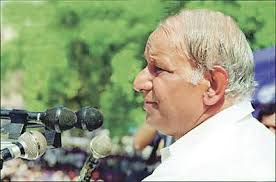
Kanshi Ram Death Anniversary 2026 will be observed on October 9, 2026, marking 20 years since the death of Kanshi Ram, an Indian political and social figure who played a significant role in the development of the Bahujan movement and the formation of the Bahujan Samaj Party (BSP). He was also a Member of Parliament in both the Lok Sabha and Rajya Sabha.
Born on March 15, 1934, in Khawaspur in Punjab’s Ropar district, Kanshi Ram first worked as a government employee before becoming involved in organised social and political activity. His public career included the formation of organisations such as BAMCEF and DS4, followed by the establishment of the BSP in 1984.
Kanshi Ram Death Anniversary 2026: Date and Key Details
| Particular | Details |
|---|---|
| Occasion | Kanshi Ram Death Anniversary |
| Date in 2026 | October 9, 2026 |
| Year of death | 2006 |
| Date of birth | March 15, 1934 |
| Birthplace | Khawaspur, Punjab |
| Known for | Social and political organising |
| Major organisations associated with | BAMCEF, DS4 and BSP |
| Parliamentary service | Lok Sabha and Rajya Sabha |
Who Was Kanshi Ram?
Kanshi Ram was an Indian political and social worker, writer and parliamentarian. His work focused on organising communities that he believed had been politically underrepresented. He developed a movement that connected social organisation with electoral politics and eventually helped establish the BSP.
Parliamentary records note that he represented Etawah and Hoshiarpur in the Lok Sabha and later served in the Rajya Sabha. He also wrote books including Birth of BAMCEF and An Era of the Stooges.
Kanshi Ram Early Life
Kanshi Ram was born on March 15, 1934, in Khawaspur village in the Ropar district of Punjab, now associated with Rupnagar. He completed a B.Sc. degree from Government College, Ropar.
After his education, he entered government service and worked in a scientific establishment. His experience as a government employee later influenced his efforts to organise employees from Scheduled Caste, Scheduled Tribe, Other Backward Class and minority communities.
Formation of BAMCEF
Kanshi Ram became associated with efforts to organise government employees from socially disadvantaged communities. The organisation that became known as BAMCEF—short for the All India Backward and Minority Communities Employees Federation—was established as a platform for employee organisation and social awareness.
BAMCEF was distinct from an electoral political party. Its emphasis was on organisation and awareness among employees and communities. Kanshi Ram later moved towards a broader political strategy in which social organisation and political representation were closely connected.
Formation of DS4
In the early 1980s, Kanshi Ram established the Dalit Shoshit Samaj Sangharsh Samiti, commonly known as DS4. It represented a further stage in his organisational work, bringing a wider social and political mobilisation approach into the public sphere.
The development from employee organisation to a broader social platform and then to an electoral political party became an important feature of Kanshi Ram’s political career.
Formation of the Bahujan Samaj Party
The Bahujan Samaj Party was founded in 1984. Kanshi Ram was its principal founder and organiser. The party sought to build political representation for communities that Kanshi Ram described collectively through the term “Bahujan”.
The BSP subsequently became an important political force in Uttar Pradesh and other parts of North India. Its electoral history is part of the broader history of Indian politics from the 1980s onward.
Kanshi Ram as a Parliamentarian
Kanshi Ram entered electoral politics and won a Lok Sabha seat from Etawah in 1991. He was re-elected in 1996 from Hoshiarpur in Punjab. He later served as a Member of the Rajya Sabha from Uttar Pradesh from 1998 to 2004.
| Parliamentary role | Period / detail |
|---|---|
| Lok Sabha | 1991–1997 |
| Etawah constituency | Elected in 1991 |
| Hoshiarpur constituency | Elected in 1996 |
| Rajya Sabha | 1998–2004 |
Kanshi Ram’s Political and Social Work
Kanshi Ram’s public work centred on political representation, organisation and social mobilisation. He argued for greater political participation by communities that he considered socially and economically disadvantaged.
His approach differed from conventional party-building models because he placed considerable emphasis on building an organised social base before and alongside electoral activity. The organisations associated with him therefore form an important part of his historical record.
Interpretations of his political ideas differ among scholars, political groups and commentators. This article focuses on documented events and positions rather than making an assessment of his political philosophy or its merits.
Books Written by Kanshi Ram
Kanshi Ram was also a writer. Parliamentary biographical material lists Birth of BAMCEF and An Era of the Stooges among his books. His writings were connected to his views on political organisation, representation and social movements.
Kanshi Ram and Indian Politics
Kanshi Ram’s public career developed during a period when questions of representation, caste and coalition politics were becoming increasingly prominent in several parts of India. His organisational model sought to turn a social base into sustained political participation. The BSP later contested elections across several states, while its strongest electoral presence developed in Uttar Pradesh.
His parliamentary record provides a concrete way to study his political career without relying on later political claims. He represented constituencies in both Uttar Pradesh and Punjab and later served in the upper house of Parliament. His career can therefore be examined through both his organisational activities and his elected positions.
Kanshi Ram’s Place in Modern Indian Political History
Historians and political commentators have interpreted Kanshi Ram’s role in different ways. Some emphasise his contribution to political mobilisation and representation, while others focus on the electoral strategies and alliances that developed around the BSP. These are interpretations rather than a single uncontested account. For an exam-oriented biography, the safest approach is to focus on verifiable dates, organisations, elections, offices and publications.
Kanshi Ram’s career is significant in the study of post-independence Indian politics because it demonstrates the development of a political organisation around social representation and electoral mobilisation. The BSP’s subsequent growth, particularly in Uttar Pradesh, made the movement associated with Kanshi Ram an important subject in studies of caste, representation and state politics.
His political career also included alliances and electoral contests that changed over time. These developments should be understood in the context of the political conditions of each period rather than treated as a single continuous strategy.
When Did Kanshi Ram Die?
Kanshi Ram died on October 9, 2006, in New Delhi, at the age of 72. His death was followed by public tributes and discussions of his role in Indian social and political movements.
October 9, 2026, therefore marks the 20th anniversary of his death.
Kanshi Ram Death Anniversary 2026: Significance
The death anniversary provides an opportunity to study Kanshi Ram’s biography, organisational work and parliamentary career. For students, the topic can be relevant to Indian polity, modern Indian political history, social movements and important personalities.
Because Kanshi Ram was a political figure, accounts of his legacy can vary according to political perspective. A factual study should therefore distinguish documented positions and events from later interpretations or political praise and criticism.
Kanshi Ram’s Legacy and Historical Context
Kanshi Ram’s career is often studied alongside the wider development of social and political movements in post-independence India. His work brought together employee organisation, community mobilisation and electoral politics in a sequence that eventually produced a national political party. The organisations he helped establish and the elections he contested provide a useful timeline for understanding that development.
His legacy is also discussed differently by different political and academic observers. Some accounts emphasise representation and mobilisation, while others examine the practical electoral strategies of the BSP and its alliances. These differences are part of the historical record and should not be reduced to a single conclusion.
Important Kanshi Ram Facts for Competitive Exams
- Kanshi Ram was born on March 15, 1934.
- He was born in Khawaspur in Punjab’s Ropar district.
- He completed a B.Sc. from Government College, Ropar.
- He was associated with BAMCEF and DS4.
- The Bahujan Samaj Party was founded in 1984 with Kanshi Ram as its principal founder.
- He was elected to the Lok Sabha from Etawah in 1991.
- He was elected from Hoshiarpur in 1996.
- He served in the Rajya Sabha from 1998 to 2004.
- He authored Birth of BAMCEF and An Era of the Stooges.
- He died on October 9, 2006, in New Delhi.
Kanshi Ram Death Anniversary 2026 FAQs
When is Kanshi Ram Death Anniversary 2026?
Kanshi Ram Death Anniversary 2026 is observed on October 9, marking 20 years since his death in 2006.
When was Kanshi Ram born?
Kanshi Ram was born on March 15, 1934, in Khawaspur, Punjab.
When did Kanshi Ram die?
He died on October 9, 2006, in New Delhi.
Which political party did Kanshi Ram found?
Kanshi Ram was the principal founder and organiser of the Bahujan Samaj Party, established in 1984.
Which organisations were associated with Kanshi Ram?
He was associated with BAMCEF and DS4 before the formation of the BSP.
When was Kanshi Ram elected to the Lok Sabha?
He was first elected to the Lok Sabha in 1991 from Etawah and was elected again from Hoshiarpur in 1996.
Did Kanshi Ram serve in the Rajya Sabha?
Yes. He served as a Rajya Sabha member from Uttar Pradesh from 1998 to 2004.
Related CareerSphere Articles
Readers can also explore CareerSphere’s coverage of National Unity Day 2026, Azad Hind Government Formation Day 2026 and Infantry Day 2026.
Leave a Reply