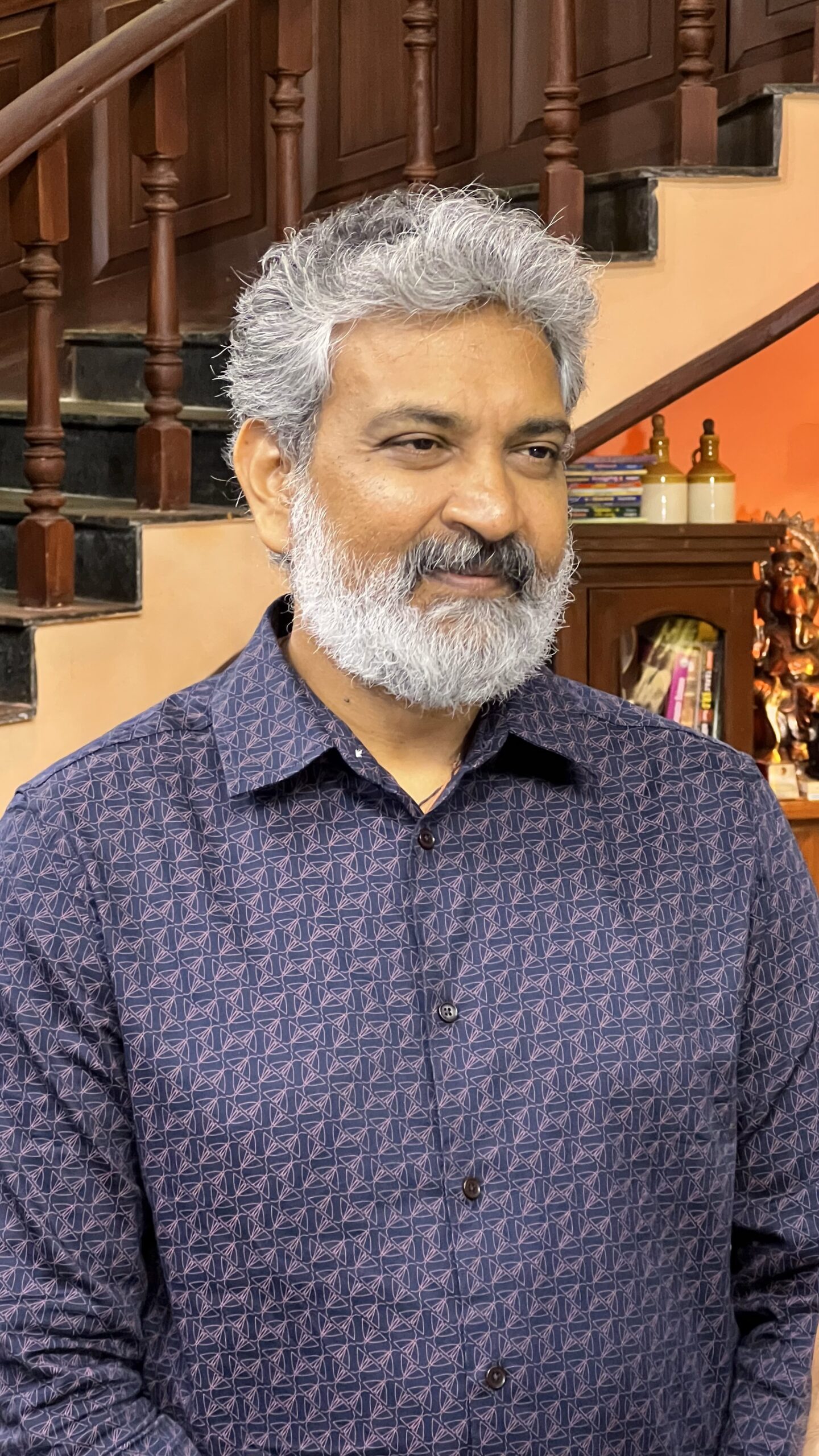
S. S. Rajamouli Birthday 2026 falls on October 10, 2026, marking the 53rd birthday of the Indian filmmaker and screenwriter. Born Koduri Srisaila Sri Rajamouli on October 10, 1973, he is known primarily for Telugu-language films and for directing large-scale works such as Magadheera, Eega, the Baahubali films and RRR. His career is frequently discussed in connection with the growing reach of Indian cinema beyond individual language markets.
S. S. Rajamouli Birthday 2026: Date and Key Details
| Particular | Details |
|---|---|
| Birthday | October 10, 2026 |
| Born | October 10, 1973 |
| Age in 2026 | 53 years |
| Birth name | Koduri Srisaila Sri Rajamouli |
| Profession | Film director and screenwriter |
| Primary film industry | Telugu cinema |
| Father | V. Vijayendra Prasad |
| Spouse | Rama Rajamouli |
| Major films | Magadheera, Eega, Baahubali films, RRR |
| Padma honour | Padma Shri, 2016 |
Who Is S. S. Rajamouli?
S. S. Rajamouli is an Indian film director and screenwriter whose work is primarily associated with Telugu cinema. His films combine action, fantasy, historical or period-inspired settings, strong emotional storylines and large-scale visual production. He began his feature-film directing career with Student No. 1 in 2001 and subsequently directed films across several genres.
Rajamouli is also known for working closely with members of his family and long-term creative collaborators. His father, V. Vijayendra Prasad, is a screenwriter who has worked on several major film projects. Music composer M. M. Keeravani is his cousin and has collaborated with him on multiple films.
S. S. Rajamouli Early Life
Rajamouli was born on October 10, 1973, in the region around Manvi in present-day Karnataka, then part of Mysore State. His family had strong connections with storytelling and cinema. He spent part of his childhood in Kovvur and later studied in Eluru and Kovvur. Accounts of his early life describe a strong interest in stories, comics and films from a young age.
His father, V. Vijayendra Prasad, became an important influence on his storytelling career. Rajamouli eventually moved toward television and film production before directing feature films. His early television work included involvement with serials, followed by his transition to feature-film direction.
Rajamouli’s Creative Collaborations and Influences
Rajamouli’s filmmaking career has developed through long-running creative collaborations. His father V. Vijayendra Prasad has contributed stories and screenplays to several projects associated with him, while composer M. M. Keeravani has provided music for many of his major films. Costume, production design, visual-effects and technical teams have also played important roles in creating the large-scale worlds seen in his films.
His films frequently draw on familiar storytelling traditions while using contemporary filmmaking technology. Epic conflicts, heroic journeys, family bonds and dramatic reversals are presented through elaborate sets, choreography, visual effects and music. This combination has become a recognizable feature of his filmography.
Another important feature of his career is the adaptation of films for audiences who speak different languages. The success of the Baahubali films and RRR demonstrated how a Telugu production could be presented to audiences across India through dubbing, subtitles and multilingual releases. It also contributed to broader interest in regional Indian cinema among international viewers.
Rajamouli was born on October 10, 1973, in the region around Manvi in present-day Karnataka, then part of Mysore State. His family had strong connections with storytelling and cinema. He spent part of his childhood in Kovvur and later studied in Eluru and Kovvur. Accounts of his early life describe a strong interest in stories, comics and films from a young age.
His father, V. Vijayendra Prasad, became an important influence on his storytelling career. Rajamouli eventually moved toward television and film production before directing feature films. His early television work included involvement with serials, followed by his transition to feature-film direction.
Rajamouli’s Directorial Debut
Rajamouli made his feature-film directorial debut with Student No. 1 in 2001. The film established him as a director in Telugu cinema. He followed it with projects that increasingly demonstrated his interest in action, dramatic storytelling and distinctive visual presentation.
| Film | Year | Why It Is Notable |
|---|---|---|
| Student No. 1 | 2001 | Feature-film directorial debut |
| Simhadri | 2003 | Action drama that expanded his profile |
| Sye | 2004 | Sports-action drama |
| Vikramarkudu | 2006 | Action film later remade in other Indian languages |
| Magadheera | 2009 | Period action film with large-scale visual storytelling |
| Eega | 2012 | Fantasy revenge story built around an unusual central character |
| Baahubali: The Beginning | 2015 | First part of the epic Baahubali story |
| Baahubali 2: The Conclusion | 2017 | Conclusion of the Baahubali story |
| RRR | 2022 | Period action drama that reached a global audience |
Baahubali and the Expansion of His Audience
The two-part Baahubali series became a major milestone in Rajamouli’s career. Baahubali: The Beginning was released in 2015, followed by Baahubali 2: The Conclusion in 2017. The films used a fictional kingdom, dramatic conflicts, elaborate sets, visual effects and a large ensemble cast to create an epic narrative.
The films were released in multiple Indian languages and reached audiences outside the traditional Telugu-speaking market. Their success also contributed to wider discussion about films being produced in one Indian language and distributed successfully across multiple language markets.
RRR and International Recognition
Rajamouli directed RRR, released in 2022, with N. T. Rama Rao Jr. and Ram Charan in the lead roles. Set in a fictionalised historical framework, the film combines action, drama and music. Its song Naatu Naatu, composed by M. M. Keeravani, won the Academy Award for Best Original Song at the 95th Academy Awards.
The international response to RRR brought renewed attention to Indian filmmaking and Telugu cinema. Rajamouli’s work was discussed in international film circles, while the film and its music received major awards and nominations outside India.
Major Awards and Honours
| Award / Honour | Year or Period | Association |
|---|---|---|
| Padma Shri | 2016 | Government of India civilian honour for contributions to the arts |
| National Film Awards | Various | Recognition associated with his films |
| Filmfare Awards South | Various | Recognition for Telugu cinema work |
| Nandi Awards | Various | State-level recognition for Telugu cinema |
| International film awards | Various | Recognition following the global reach of his films |
Rajamouli received the Padma Shri in 2016 for contributions in the field of art. His films have also received recognition through Indian and international awards.
Rajamouli’s Storytelling Style
Several recurring characteristics can be seen across Rajamouli’s filmography:
- Large-scale visual storytelling: His films frequently use elaborate production design, action set pieces and visual effects.
- Strong emotional arcs: Family relationships, friendship, loyalty and personal sacrifice often play important roles.
- Clear dramatic conflicts: His stories commonly establish strong opposing forces and long-form character journeys.
- Mythic and historical influences: Some films draw inspiration from Indian history, folklore or epic storytelling while using fictional characters and situations.
- Music and spectacle: Songs, background music and choreographed sequences form important parts of his cinematic presentation.
Why Rajamouli Is Important to Indian Cinema
Rajamouli’s career is significant for the way several of his films travelled beyond their original language market. The Baahubali films and RRR were presented to audiences across India and internationally, helping create wider awareness of Telugu filmmaking.
His filmography also illustrates the increasing role of dubbing, subtitling, multilingual releases and digital distribution in connecting regional Indian cinema with audiences in other parts of the country and the world.
S. S. Rajamouli Birthday 2026: Important Exam Facts
| Question | Answer |
|---|---|
| When was S. S. Rajamouli born? | October 10, 1973 |
| What is his birth name? | Koduri Srisaila Sri Rajamouli |
| Which film marked his feature directorial debut? | Student No. 1 |
| Which film series made him widely known across India? | The Baahubali series |
| Who composed the music for RRR? | M. M. Keeravani |
| Which song from RRR won the Academy Award? | Naatu Naatu |
| Which civilian honour did Rajamouli receive in 2016? | Padma Shri |
| What is his primary film industry? | Telugu cinema |
S. S. Rajamouli Birthday 2026 FAQs
When is S. S. Rajamouli Birthday 2026?
S. S. Rajamouli Birthday 2026 is on October 10. He was born on October 10, 1973.
How old is S. S. Rajamouli in 2026?
He turns 53 on October 10, 2026.
What is S. S. Rajamouli’s real name?
His birth name is Koduri Srisaila Sri Rajamouli.
What was Rajamouli’s first film as a director?
Student No. 1, released in 2001, marked his feature-film directorial debut.
Which films are associated with S. S. Rajamouli?
Important films in his filmography include Student No. 1, Magadheera, Eega, Baahubali: The Beginning, Baahubali 2: The Conclusion and RRR.
Which award did Rajamouli receive in 2016?
He was awarded the Padma Shri in 2016 for contributions to the arts.
Related CareerSphere Articles
- World Students’ Day 2026: Dr. APJ Abdul Kalam & Key Facts
- R. K. Narayan Birth Anniversary 2026: Life, Books & Facts
- World Coding Day 2026: Date, History, Significance & Coding Facts
S. S. Rajamouli Birthday 2026 is an opportunity to revisit the career of a filmmaker whose work has connected Telugu cinema with audiences across India and internationally. His filmography provides useful examples of large-scale Indian filmmaking, multilingual distribution and the growing global reach of regional cinema.
Leave a Reply