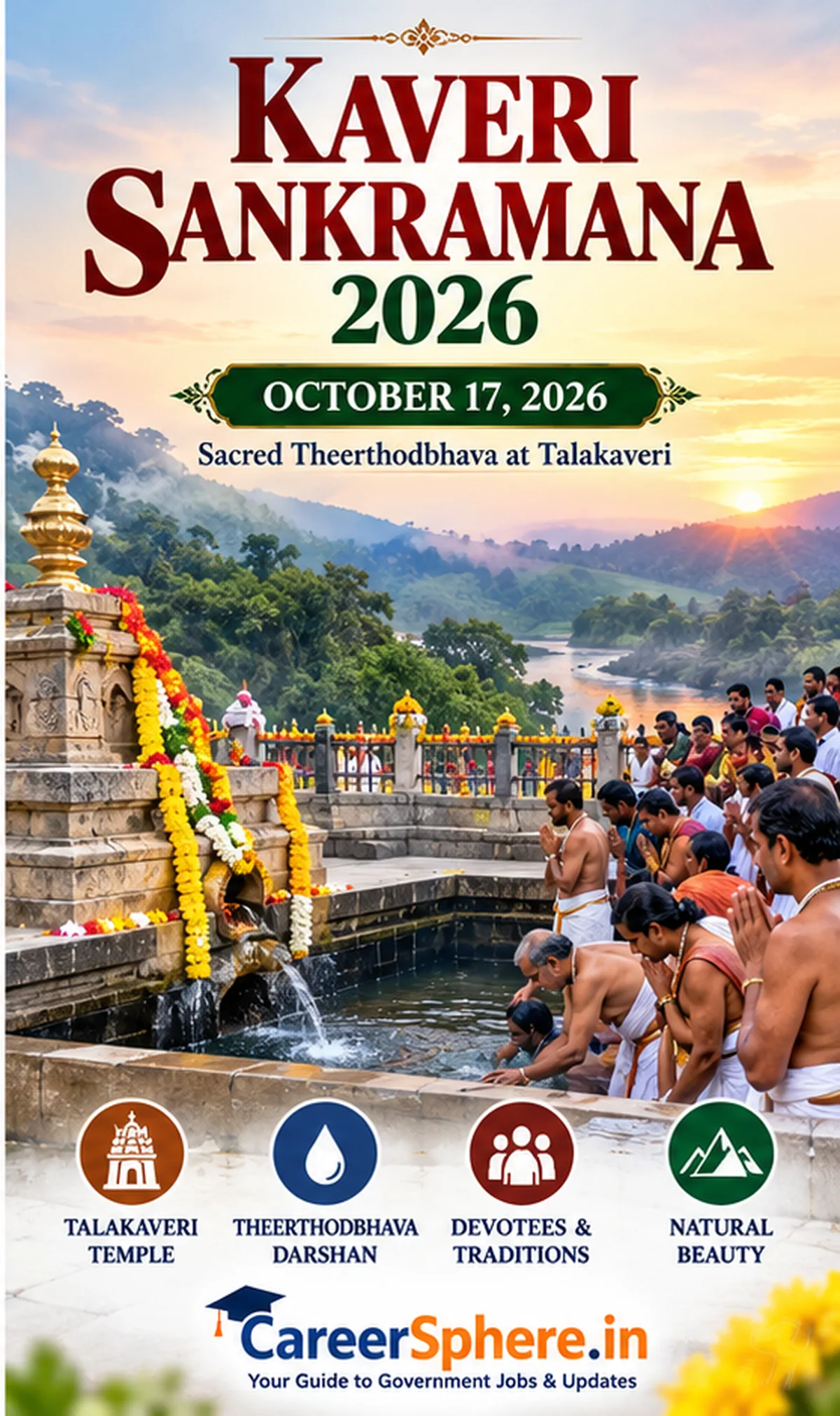
Kaveri Sankramana 2026 is observed on Saturday, October 17, 2026, with the principal pilgrimage at Talakaveri in Kodagu district, Karnataka. Also associated with Tula Sankramana, the annual observance honours the sacred river Kaveri and is especially known for Theerthodbhava, the ritual moment associated with the emergence of sacred water at the Brahma Kundike in Talakaveri.
For the people of Kodagu and devotees from Karnataka and neighbouring states, Kaveri Sankramana is both a spiritual occasion and a cultural gathering. Thousands visit the hill shrine, offer prayers, collect sacred water and travel to nearby Bhagamandala. The festival also reminds visitors of the wider cultural, agricultural and ecological importance of the Kaveri river across southern India.
Kaveri Sankramana 2026: Key Facts
| Festival | Kaveri Sankramana / Tula Sankramana 2026 |
|---|---|
| Date | October 17, 2026 |
| Day | Saturday |
| Main venue | Talakaveri, Kodagu, Karnataka |
| Main observance | Theerthodbhava |
| Associated places | Talakaveri and Bhagamandala |
| Cultural region | Kodagu / Coorg |
| Significance | Worship of river Kaveri, pilgrimage, sacred water and community tradition |
What Is Kaveri Sankramana?
Kaveri Sankramana marks the Sun’s transition associated with the Tula period in the traditional calendar. At Talakaveri, regarded as the sacred origin of the Kaveri, devotees gather for worship and the Theerthodbhava observance. The occasion is particularly important in Kodagu, where the river is deeply connected with local religious and cultural identity.
The festival is not limited to a single temple ritual. It links pilgrimage, family traditions, reverence for water and the seasonal rhythm of the region. Many devotees carry holy water home and preserve it for religious use.
Kaveri Sankramana 2026 Date
In 2026, Kaveri Sankramana falls on October 17. Ritual timings, including the precise Theerthodbhava moment, should be checked against official local announcements or a reliable location-specific panchang closer to the festival. Visitors should not rely on a timing copied from a different year.
Because October 17, 2026 is a Saturday, pilgrimage traffic may be especially significant. Travellers should plan transport, parking and accommodation with adequate buffer time.
Where Is Talakaveri?
Talakaveri is located in the Brahmagiri hills of Kodagu district in Karnataka. It is regarded as the sacred source of the Kaveri river and is one of the district’s most important pilgrimage destinations. The temple complex and Brahma Kundike are the focus of the annual Sankramana gathering.
The hill setting adds to the atmosphere of the pilgrimage, but visitors should remember that weather in Kodagu can change quickly. Rain, mist and slippery surfaces are possible, so comfortable footwear and weather protection are useful.
What Is Theerthodbhava?
Theerthodbhava is the central ritual associated with Kaveri Sankramana. Devotional tradition describes sacred water rising at the Brahma Kundike at Talakaveri at the auspicious moment. Devotees gather to witness the event, offer prayers and receive or collect the sacred water.
For pilgrims, Theerthodbhava represents much more than a physical event. It symbolises the sacred presence of Mother Kaveri and renews the community’s relationship with the river each year.
Religious Significance of River Kaveri
The Kaveri is revered as a sacred river and is often affectionately referred to as Kaveri Amma or Mother Kaveri. Temples, pilgrimage centres and religious traditions are found throughout the river basin. The river also supports towns, farms and ecosystems across Karnataka and Tamil Nadu.
Kaveri Sankramana therefore brings spiritual reverence and everyday dependence on water into the same cultural frame. For students and visitors, it offers an opportunity to think about how rivers can simultaneously be sacred landscapes, ecological systems and economic lifelines.
How Kaveri Sankramana Is Celebrated
Pilgrimage to Talakaveri
Devotees travel to Talakaveri before the main ritual, and the area becomes especially busy around the auspicious period. Pilgrims participate in prayers and wait for Theerthodbhava.
Holy Bath and Sacred Water
Ritual bathing and the collection of sacred water are important practices for many devotees. Visitors should follow temple and administration instructions, particularly when crowds are heavy.
Temple Worship
Special prayers and offerings form part of the observance. Families may also perform their own traditional rituals according to community practice.
Visit to Bhagamandala
Many pilgrims combine Talakaveri with Bhagamandala, an important religious centre located on the route. The area is associated with the confluence traditionally known as Triveni Sangama.
What Is Kaveri Jatre?
The annual pilgrimage period is also associated with a festive fair or Kaveri Jatre. Such gatherings bring together pilgrims, local traders, food vendors and visitors. Regional products and community activity add a social dimension to the religious observance.
Visitors should support local businesses responsibly while avoiding litter and unnecessary single-use plastics, especially because the celebration is centred on reverence for a river and its source landscape.
Talakaveri and Bhagamandala: Why Visit Both?
Talakaveri is the main focus of Kaveri Sankramana, while Bhagamandala is another major pilgrimage location nearby. Visiting both helps travellers understand the religious geography of the area rather than treating Talakaveri as an isolated attraction.
During festival days, however, road traffic can be slow. Travellers should avoid planning an overly tight schedule and should follow any temporary traffic diversions or parking arrangements announced by local authorities.
How to Reach Talakaveri
Talakaveri is reached by road through Kodagu. Madikeri is a common base for visitors to the district, while Bhagamandala lies on the approach to Talakaveri. Bus, taxi and private-vehicle options vary, and special arrangements may operate during major pilgrimage periods.
Those travelling from outside Kodagu should confirm current road conditions before departure. Mountain roads require more time than the same distance on a highway, particularly during rain, fog or heavy festival traffic.
Weather and What to Carry
October in Kodagu can be pleasant, but hill weather is variable. Carry a light rain layer, comfortable non-slip footwear, drinking water, essential medicines and modest clothing suitable for a temple visit. An umbrella or compact rain jacket can be useful.
Large crowds can also mean long periods of standing or walking. Elderly visitors and families with young children should plan rest stops and avoid unnecessary rushing.
Temple and Pilgrimage Etiquette
- Follow the dress and conduct rules displayed at the temple.
- Respect queues and instructions from temple staff and local authorities.
- Do not push toward ritual areas during crowded periods.
- Ask before photographing ceremonies or people.
- Keep footwear only in designated places.
- Avoid carrying prohibited items into the temple complex.
- Dispose of waste responsibly and protect the source area.
Environmental Meaning of Kaveri Sankramana
A festival dedicated to a river naturally raises questions about water conservation. The Kaveri basin supports agriculture, drinking-water systems, biodiversity and millions of people. Respect for the river can therefore extend beyond ritual observance to responsible water use, protection of catchments and reduction of pollution.
Schools and community groups can use Kaveri Sankramana to discuss watershed conservation, rainwater harvesting, river ecosystems and the connection between forests in the Western Ghats and downstream water security.
Kaveri Sankramana Activities for Students
- Locate Talakaveri, Kodagu and the Kaveri basin on a map.
- Create a poster titled “From Talakaveri to the Sea.”
- Prepare a short presentation on the cultural and economic importance of the Kaveri.
- Research the Western Ghats and their role in water systems.
- Write five practical ways to reduce water waste at home or school.
- Compare Kaveri Sankramana with another Indian river festival.
These activities help students understand that geography, ecology and culture are interconnected rather than separate subjects.
Travel Checklist for Kaveri Sankramana 2026
- Confirm the October 17 date and latest official ritual timing.
- Book Kodagu accommodation early if staying overnight.
- Check road, weather and traffic advisories.
- Carry valid identification and essential medicines.
- Wear temple-appropriate clothing and comfortable footwear.
- Keep rain protection available.
- Carry drinking water while avoiding unnecessary plastic waste.
- Allow extra time for queues and traffic.
- Follow local police, temple and district-administration directions.
Responsible Tourism During the Festival
Talakaveri is both a pilgrimage site and an environmentally sensitive hill destination. Visitors can reduce their impact by carrying reusable bottles, avoiding litter, respecting wildlife and vegetation, and using designated facilities. Religious offerings should be handled according to temple guidance rather than discarded into water or surrounding land.
Supporting local eateries, guides and legitimate small businesses can also help ensure that tourism benefits the host community.
Related CareerSphere Articles
- Dussehra 2026: Vijayadashami Date, Puja and Wishes
- Sharad Purnima 2026: Date, Tithi and Kojagara Puja
- Valmiki Jayanti 2026
- Meerabai Jayanti 2026
- Tawang Festival 2026
Frequently Asked Questions
When is Kaveri Sankramana 2026?
Kaveri Sankramana 2026 falls on Saturday, October 17, 2026.
Where is Kaveri Sankramana mainly celebrated?
The principal pilgrimage takes place at Talakaveri in Kodagu district, Karnataka.
What is Theerthodbhava?
Theerthodbhava is the central sacred-water observance associated with the Brahma Kundike at Talakaveri during Kaveri Sankramana.
Is Kaveri Sankramana also called Tula Sankramana?
Yes. The observance is closely associated with Tula Sankramana and is commonly discussed using both names.
What is special about Talakaveri?
Talakaveri in the Brahmagiri hills is revered as the sacred source of the river Kaveri.
Should visitors also go to Bhagamandala?
Many pilgrims combine both places because Bhagamandala is an important religious centre on the route to Talakaveri.
What time is Theerthodbhava in 2026?
The precise ritual timing should be verified from current official local announcements or a reliable panchang closer to the event rather than copied from a previous year.
Conclusion
Kaveri Sankramana 2026 on October 17 is a major Kodagu pilgrimage centred on Talakaveri, Theerthodbhava and devotion to Mother Kaveri. Its significance reaches beyond the ritual itself: the festival connects religion, regional identity, water, ecology and community life. Visitors who plan for crowds, hill weather and temple etiquette can experience the observance respectfully while gaining a deeper understanding of the Kaveri’s place in southern India.
Leave a Reply