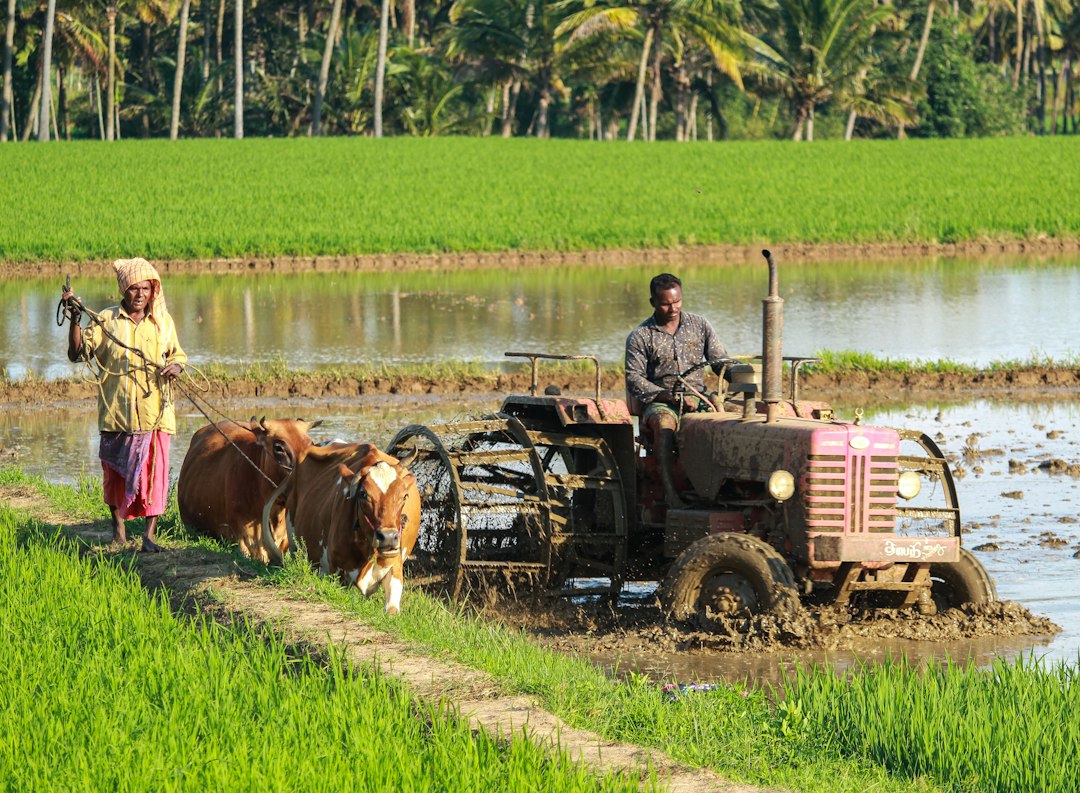
National Farmers Day 2026, also known as Kisan Diwas, will be observed on Wednesday, December 23, 2026. The day recognises the contribution of farmers to India’s food system and rural economy and marks the birth anniversary of former Prime Minister Chaudhary Charan Singh.
Quick Facts
| Item | Details |
|---|---|
| Date | December 23, 2026 |
| Day | Wednesday |
| Also known as | Kisan Diwas |
| Associated personality | Chaudhary Charan Singh |
Why Is National Farmers Day Observed?
December 23 is observed to honour farmers and marks the birth anniversary of Chaudhary Charan Singh, India’s fifth Prime Minister, who was closely associated with rural and agricultural issues.
Why Farmers Matter
Farmers are central to food production and rural livelihoods. Agriculture also supports dairy, storage, transportation, processing and markets. Kisan Diwas provides an opportunity to understand the work and challenges involved in producing food.
How Kisan Diwas Is Observed
- Farmer recognition programmes.
- Discussions on agricultural technology and sustainability.
- Workshops for farming communities.
- Exhibitions on crops, machinery and practices.
- Recognition of innovative farming initiatives.
National Farmers Day Messages
- Warm wishes to farmers who work every day to feed the nation.
- On Kisan Diwas, let us recognise the knowledge, hard work and resilience of India’s farming community.
- Respect and gratitude to farmers and rural communities for their contribution to food security.
FAQs
When is National Farmers Day 2026?
December 23, 2026.
What is Kisan Diwas?
It is another name for National Farmers Day.
Whose birth anniversary is marked?
Chaudhary Charan Singh.
Related Reading: Explore the CareerSphere News section and agriculture-related observances such as World Soil Day 2026.
National Farmers Day 2026: Understanding Kisan Diwas
National Farmers Day, commonly known as Kisan Diwas, is observed in India on December 23. The date marks the birth anniversary of Chaudhary Charan Singh, India’s fifth Prime Minister, who was closely associated with agricultural and rural issues. The observance provides an opportunity to recognise the work of farmers and to understand the systems that connect farming with food, markets and rural livelihoods.
Who Was Chaudhary Charan Singh?
Chaudhary Charan Singh was born on December 23, 1902, in Hapur district of present-day Uttar Pradesh. His public life was closely connected with rural India and agricultural policy. He served as Prime Minister of India from June 1979 to January 1980 and was widely associated with issues affecting cultivators and rural communities.
Why Farmers Matter to the Economy
Farming is the starting point for a wide network of economic activities. Crops and livestock move through storage, transportation, processing, wholesale and retail markets before reaching consumers. Agricultural demand also supports equipment manufacturers, input suppliers, logistics providers and many rural services.
Farmers therefore contribute to food availability as well as the wider rural economy. At the same time, farming is exposed to weather, market prices, input costs, water availability, pests and other risks. Understanding these factors makes appreciation of farmers more meaningful than simply celebrating the occupation.
Major Challenges Faced by Farmers
Agricultural challenges differ by crop and region, but can include uncertain rainfall, drought or floods, rising input costs, pest and disease pressure, limited storage, price fluctuations and access to markets. Small and marginal farmers may have fewer resources to absorb sudden losses. Access to extension services, irrigation, credit, insurance, storage and reliable market information can therefore influence farm resilience.
Technology and Modern Agriculture
Technology is changing farming in several ways. Weather information, soil testing, precision irrigation, farm machinery, mobile advisory services, satellite-based monitoring and digital marketplaces can help farmers make decisions. However, technology works best when it is affordable, locally relevant and supported by training and reliable infrastructure.
Women in Agriculture
Women contribute significantly to agricultural and allied activities, including crop operations, livestock care, dairy work, seed management and post-harvest tasks. Their contribution may be under-recognised when agricultural work is measured only through formal ownership or income records. National Farmers Day can provide an opportunity to acknowledge women farmers and workers as part of the wider agricultural community.
National Farmers Day Activities
- Recognise local farmers and innovative farming practices.
- Organise agricultural technology demonstrations.
- Conduct soil-health and water-conservation awareness programmes.
- Hold discussions on sustainable agriculture and climate resilience.
- Arrange farmer-producer or cooperative awareness sessions.
- Encourage students to learn how food reaches consumers.
Kisan Diwas Messages
Suitable messages include: “Respect and gratitude to farmers for their contribution to food security,” “On Kisan Diwas, let us recognise the knowledge, effort and resilience of India’s farming communities,” and “Strong rural communities and resilient agriculture are important to a sustainable food system.”
National Farmers Day and Related Topics
Readers can explore the CareerSphere News section, World Soil Day 2026 and World Food Day 2026 for related agriculture, soil and food awareness content.
National Farmers Day 2026: Agriculture Beyond the Farm
Agriculture is part of a wider system that includes input suppliers, farmers, labourers, storage operators, transporters, processors, traders, retailers and consumers. A successful harvest therefore depends on more than what happens in a field. Roads, electricity, irrigation, cold storage, market information, financial services and processing facilities can all influence how agricultural products move through the economy.
This wider perspective is useful on Kisan Diwas because it shows why support for farmers can involve many different sectors. Improving productivity is only one objective; reducing post-harvest losses, improving market access and strengthening resilience can also matter to farm incomes and food security.
Climate and Farm Resilience
Weather variability can affect crop yields, livestock and farm incomes. Farmers may respond through crop diversification, water management, improved soil practices, weather information, insurance where available and other locally appropriate measures. The correct approach depends on geography, crop, soil and available resources, so agricultural advice should come from credible local experts.
Soil and Water Management
Healthy soil supports crop productivity and water management. Practices such as appropriate crop rotation, organic matter management, erosion control and efficient irrigation can contribute to long-term farm resilience when suited to local conditions. Readers can learn more through World Soil Day 2026.
From Farmer to Consumer
Food reaches consumers through a complex chain. Better storage and processing can reduce losses and create additional value from agricultural products. Farmer-producer organisations and cooperatives can help groups of farmers access markets and services, although the structure and effectiveness of such organisations vary by location.
National Farmers Day 2026 Checklist
- Recognise farmers and agricultural workers.
- Learn about Chaudhary Charan Singh and Kisan Diwas.
- Understand the wider agricultural value chain.
- Discuss climate resilience, soil and water management.
- Learn how technology and market access affect farming.
- Support informed, respectful agricultural awareness.
Key Takeaways
- National Farmers Day is observed on December 23.
- The date marks the birth anniversary of Chaudhary Charan Singh.
- Farmers support food production and a wide rural value chain.
- Technology, infrastructure, market access and resilience are important agricultural themes.
- Kisan Diwas is an opportunity to recognise both farmers and the wider rural community.
Frequently Asked Questions About National Farmers Day
When is National Farmers Day 2026?
National Farmers Day, or Kisan Diwas, will be observed on December 23, 2026.
Whose birth anniversary is marked?
The date marks the birth anniversary of Chaudhary Charan Singh, India’s fifth Prime Minister, who was closely associated with rural and agricultural issues.
Why is farmer awareness important?
Farmers are central to food production and support a wider network involving storage, transport, processing, markets and rural services.
How can students participate?
Students can research local crops, study the journey of food from farm to market and learn about soil, water and sustainable agriculture.
\n
Final Reader Note
Kisan Diwas is an opportunity to look beyond the image of farming as a single activity. Agriculture connects farmers with soil, water, livestock, storage, transport, processing, markets and consumers. Understanding these connections helps explain why rural infrastructure and market access are important to agricultural resilience.
Students can use National Farmers Day to learn about local crops and farming practices, while communities can recognise the contributions of farmers and agricultural workers. Respect is strongest when it is accompanied by informed understanding.
\n
Recognising Agriculture as a Knowledge-Based Sector
Modern farming combines traditional knowledge with scientific and technological tools. Farmers make decisions about crops, soil, water, weather, labour and markets, often under uncertain conditions. Agricultural extension services, research institutions and farmer organisations can help producers access new information and practices.
Young people can also see agriculture as a field that includes agronomy, veterinary science, food processing, logistics, finance, technology and entrepreneurship. National Farmers Day can therefore encourage respect for farming while also highlighting the many careers connected with the agricultural economy.
\n
Final Kisan Diwas Reminder
National Farmers Day is most useful when appreciation is connected with understanding. Farmers work within a system shaped by weather, markets, soil, water, technology and infrastructure. Learning about these connections can help readers appreciate both the contribution of farming and the practical challenges faced by agricultural communities.
Students and community groups can continue the learning beyond December 23 through local agriculture projects, soil awareness and food-system activities.
\n
Conclusion
National Farmers Day 2026 is a reminder of the importance of farmers, agriculture and resilient rural communities.
Leave a Reply