World Octopus Day 2026: Date, Meaning, Octopus Facts, Activities & Quiz
World Octopus Day 2026 is observed on Thursday, 8 October 2026. The informal wildlife-awareness observance celebrates octopuses and gives schools, aquariums and ocean enthusiasts an opportunity to learn about these remarkable marine invertebrates.
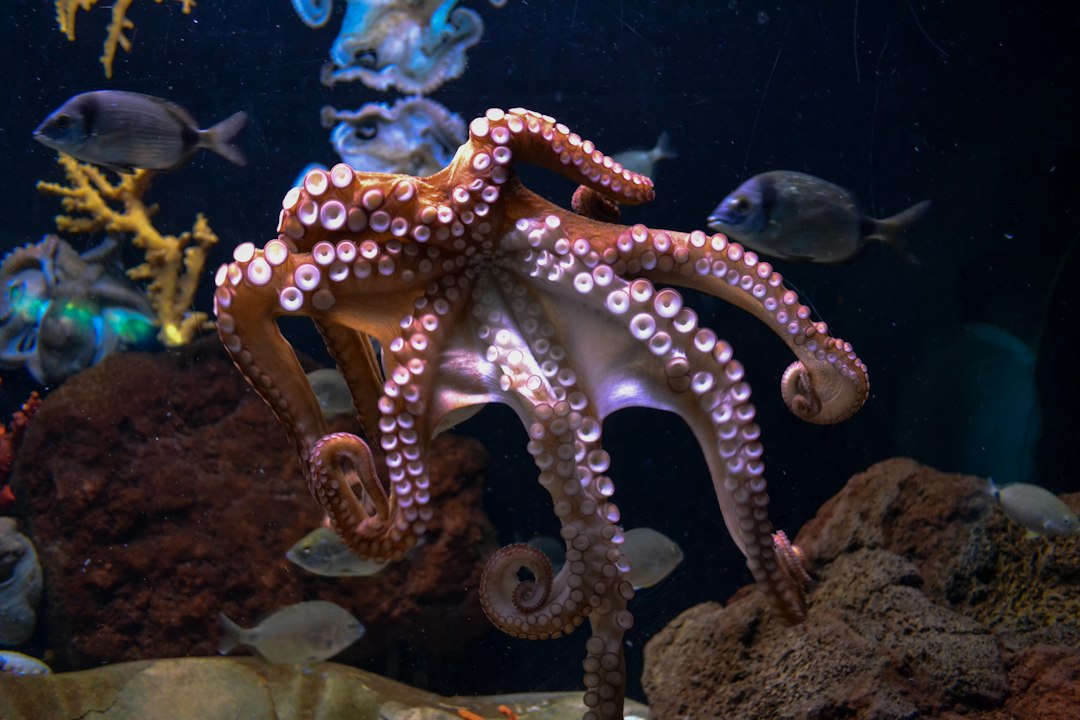
Octopuses are cephalopod molluscs related to squid and cuttlefish. They are known for eight arms, sophisticated nervous systems, flexible bodies, camouflage abilities and a range of behaviours that have made them important subjects in marine biology and animal-behaviour research.
World Octopus Day 2026: Quick Facts
| Date | 8 October 2026 |
| Day | Thursday |
| Type | Informal marine-life awareness observance |
| Animal group | Cephalopod molluscs |
| Arms | Eight |
| Habitat | Marine environments |
What Is World Octopus Day?
World Octopus Day is commonly marked on October 8 as a day for appreciating and learning about octopuses. It is not an official United Nations international day, and there is no single global authority governing every activity associated with it.
The observance is often discussed as part of a broader period of cephalopod appreciation in early October. For CareerSphere, the useful educational angle is straightforward: use the date to explore real octopus biology, marine ecosystems and responsible ocean awareness without inventing an official theme or institutional history.
When Is World Octopus Day 2026?
World Octopus Day is observed on October 8. In 2026, October 8 falls on a Thursday. Schools can combine the day with biology, environmental science, art, reading and general-knowledge activities.
What Is an Octopus?
An octopus is a marine mollusc in the class Cephalopoda. Its close relatives include squid, cuttlefish and nautiluses. Octopuses have a soft body, a mantle, eight muscular arms equipped with suckers, and a beak used in feeding.
Because they lack the rigid internal skeleton familiar in vertebrates, many octopuses can move through surprisingly narrow spaces, limited by the size of harder structures such as the beak. Their flexible arms can perform complex movements and sensory tasks.
Octopus or Octopi: What Is the Correct Plural?
Octopuses is the standard English plural and is widely used in scientific and general writing. “Octopi” is also encountered in popular usage, but the word “octopus” entered English through scientific Latin from Greek, so the Latin-style ending is not required.
For a school article or science project, “octopuses” is the clearest choice.
Why Are Octopuses So Interesting?
Octopuses combine unusual anatomy with complex behaviour. Their nervous systems are distributed through the body, with large numbers of neurons located in the arms. They can explore objects, manipulate their surroundings and learn from experience.
Different species show different lifestyles and adaptations, so statements about “the octopus” should not be assumed to describe every species identically.
Do Octopuses Have Three Hearts?
Yes. Octopuses have three hearts: two branchial hearts associated with circulation through the gills and one systemic heart that circulates blood through the rest of the body. Their blood uses the copper-containing respiratory pigment hemocyanin and can appear blue when oxygenated.
How Do Octopuses Camouflage?
Many octopuses can change their appearance rapidly. Specialised pigment-containing cells called chromatophores contribute to colour changes, while other skin structures and tissues can influence reflection, pattern and texture.
Camouflage can help with avoiding predators, approaching prey and communication. The exact capabilities differ between species.
Can an Octopus Regrow an Arm?
Octopuses can regenerate damaged or lost portions of their arms. Regeneration is a biological process that takes time; it should not be imagined as an instant replacement. Researchers study cephalopod regeneration to better understand nervous tissue, movement and healing.
Do Octopuses Have Bones?
Octopuses do not have a bony skeleton like humans or fish. Their largely soft bodies give them exceptional flexibility. They do, however, have hard structures, including a beak.
How Intelligent Are Octopuses?
Scientists study octopus cognition through behaviours such as problem-solving, exploration, learning and object manipulation. Calling an animal “intelligent” can cover many different abilities, so researchers typically examine specific behaviours rather than treating intelligence as a single simple score.
Laboratory and aquarium observations have demonstrated sophisticated behaviours in several octopus species, contributing to broader scientific interest in how complex cognition can evolve in animals very different from vertebrates.
Where Do Octopuses Live?
Octopuses are marine animals found in oceans around the world, from coastal environments to deep-sea habitats. Different species occupy reefs, rocky areas, sandy or muddy seabeds, crevices and deep ocean environments.
There are no naturally occurring freshwater octopus species. Habitat, depth, temperature and behaviour vary widely across species.
What Do Octopuses Eat?
Diet varies by species and habitat. Many octopuses prey on crustaceans, molluscs and other marine animals. They use their arms and suckers to explore and capture food, and the hard beak helps process prey.
Predator-prey relationships involving octopuses form part of wider marine food webs, so they should be understood in their ecological context rather than as isolated curiosities.
World Octopus Day 2026 Theme
CareerSphere has not identified a single authoritative official global theme for World Octopus Day 2026. Because this is an informal observance without one governing international organisation, we do not invent a 2026 theme.
World Octopus Day Activities
- Create a labelled diagram showing mantle, eye, arms, suckers and beak location.
- Compare octopuses, squid and cuttlefish in a classroom chart.
- Research one octopus species and its habitat.
- Make a fact-versus-myth poster about octopus biology.
- Watch educational footage from a reputable aquarium or scientific institution.
- Discuss camouflage and how it differs from simply “changing colour”.
- Create marine-food-web diagrams that include a local or well-documented octopus species.
- Hold an octopus general-knowledge quiz.
Activities for Schools
A good school activity is a “claim checker.” Give students statements such as “octopuses have three hearts,” “all octopuses live on coral reefs,” and “octopuses have no hard body structures.” Students must classify each statement and find a reputable scientific source supporting their answer.
This approach teaches both biology and source evaluation. Younger children can instead draw an octopus and label its eight arms, mantle and eyes while learning that an octopus is a mollusc rather than a fish.
30-Minute World Octopus Day Programme
- 3 minutes: introduce World Octopus Day and the October 8 date.
- 7 minutes: explain cephalopod anatomy and the three-heart fact.
- 5 minutes: show how camouflage works using reputable images or video.
- 10 minutes: teams complete a fact-versus-myth challenge.
- 5 minutes: conduct a rapid quiz and recap.
World Octopus Day 2026 Messages
- Happy World Octopus Day 2026! Explore the extraordinary biology of one of the ocean’s most fascinating invertebrates.
- Eight arms, three hearts and countless reasons to learn — celebrate World Octopus Day on October 8.
- World Octopus Day is a great excuse to turn curiosity about the ocean into science learning.
- Learn about octopuses, their habitats and the marine ecosystems they call home.
- Celebrate marine life with facts, curiosity and respect for wildlife.
World Octopus Day Captions
- 🐙 October 8 — World Octopus Day 2026.
- Eight arms. Three hearts. One fascinating animal.
- Today’s lesson comes with suckers: Happy World Octopus Day!
- Deep-sea curiosity starts with one good question.
- Camouflage, cognition and cephalopods — October 8 is for octopuses.
Short Speech for World Octopus Day 2026
Good morning everyone. Today, October 8, we celebrate World Octopus Day. Octopuses are marine molluscs and belong to the group of animals called cephalopods.
They are remarkable for many reasons. They have eight arms, three hearts, highly flexible bodies and sophisticated nervous systems. Many species can rapidly alter their appearance, helping them interact with their environment.
World Octopus Day gives us an enjoyable way to study biology and marine ecosystems. Let us use our curiosity to learn from reliable scientific sources and develop greater respect for ocean life. Thank you.
10 Lines on World Octopus Day
- World Octopus Day is observed on October 8.
- In 2026, it falls on Thursday.
- An octopus is a marine mollusc.
- Octopuses belong to the class Cephalopoda.
- They have eight arms.
- They have three hearts.
- Many species can change their appearance rapidly.
- Octopuses have flexible bodies without a bony skeleton.
- Scientists study their learning and problem-solving abilities.
- The day is useful for marine-life education and awareness.
World Octopus Day Quiz
When is World Octopus Day?
October 8.
How many arms does an octopus have?
Eight.
How many hearts does an octopus have?
Three.
Is an octopus a fish?
No. It is a mollusc belonging to the cephalopods.
What is the standard English plural of octopus?
“Octopuses” is the standard English plural.
Do octopuses live in freshwater?
No naturally occurring freshwater octopus species are known; octopuses are marine animals.
World Octopus Day Classroom Checklist
- Choose a reliable aquarium, museum, university or scientific source.
- Select one octopus species rather than assuming every species behaves identically.
- Record its scientific name, habitat, approximate size and diet.
- Identify one adaptation and explain what evidence supports its function.
- Check whether viral “octopus facts” are actually supported by the source.
- Create a short poster or presentation citing the sources used.
- Finish with one unanswered question for further research.
Related October 2026 Awareness Days
Continue exploring nature and science with World Animal Day 2026, World Migratory Bird Day 2026 and International Geodiversity Day 2026.
World Octopus Day Action Plan
Turn the observance into a simple learning activity instead of only reading facts. Use this practical plan at school, college, an aquarium club or at home.
Before October 8
- Choose one learning goal: camouflage, intelligence, anatomy or ocean conservation.
- Prepare three reliable facts: verify each fact with a science museum, aquarium, university or conservation source.
- Create one visual: make a labelled octopus diagram, habitat poster or fact card.
- Plan one action: reduce single-use plastic, organise a short marine-life quiz or share responsible wildlife-viewing guidance.
30-Minute Classroom Checklist
- 5 minutes: introduce World Octopus Day and explain that it is an informal observance.
- 10 minutes: demonstrate camouflage, arm movement and problem-solving through pictures or a short teacher-led explanation.
- 10 minutes: run a five-question quiz or small-group fact-checking activity.
- 5 minutes: ask each participant to write one ocean-friendly action they can follow.
After the Activity
Review what participants learned, correct any myths discovered during the quiz, display the best fact cards and keep the conservation commitments visible for the rest of October. This gives the observance a clear learning outcome and a practical next step.
Frequently Asked Questions
What is the date of World Octopus Day 2026?
World Octopus Day 2026 is Thursday, October 8.
Is World Octopus Day an official UN observance?
No. It is an informal marine-life awareness observance rather than an official United Nations international day.
What is the World Octopus Day 2026 theme?
We have not identified a single authoritative global 2026 theme, so CareerSphere does not invent one.
Why is an octopus a cephalopod?
Octopuses belong to the molluscan class Cephalopoda, which also includes squid, cuttlefish and nautiluses.
Are octopuses intelligent?
Researchers have documented sophisticated learning, exploration, problem-solving and object-manipulation behaviours in several species. Scientists generally study these specific abilities rather than reducing animal cognition to one simple label.
Conclusion
World Octopus Day 2026 on October 8 is a fun opportunity to explore serious science. From three hearts and eight arms to camouflage, regeneration and complex behaviour, octopuses demonstrate how diverse animal evolution can be.
For students, the most valuable celebration is simple: choose reliable scientific sources, test surprising claims and let curiosity about one extraordinary animal lead to a broader understanding of ocean life.
Leave a Reply