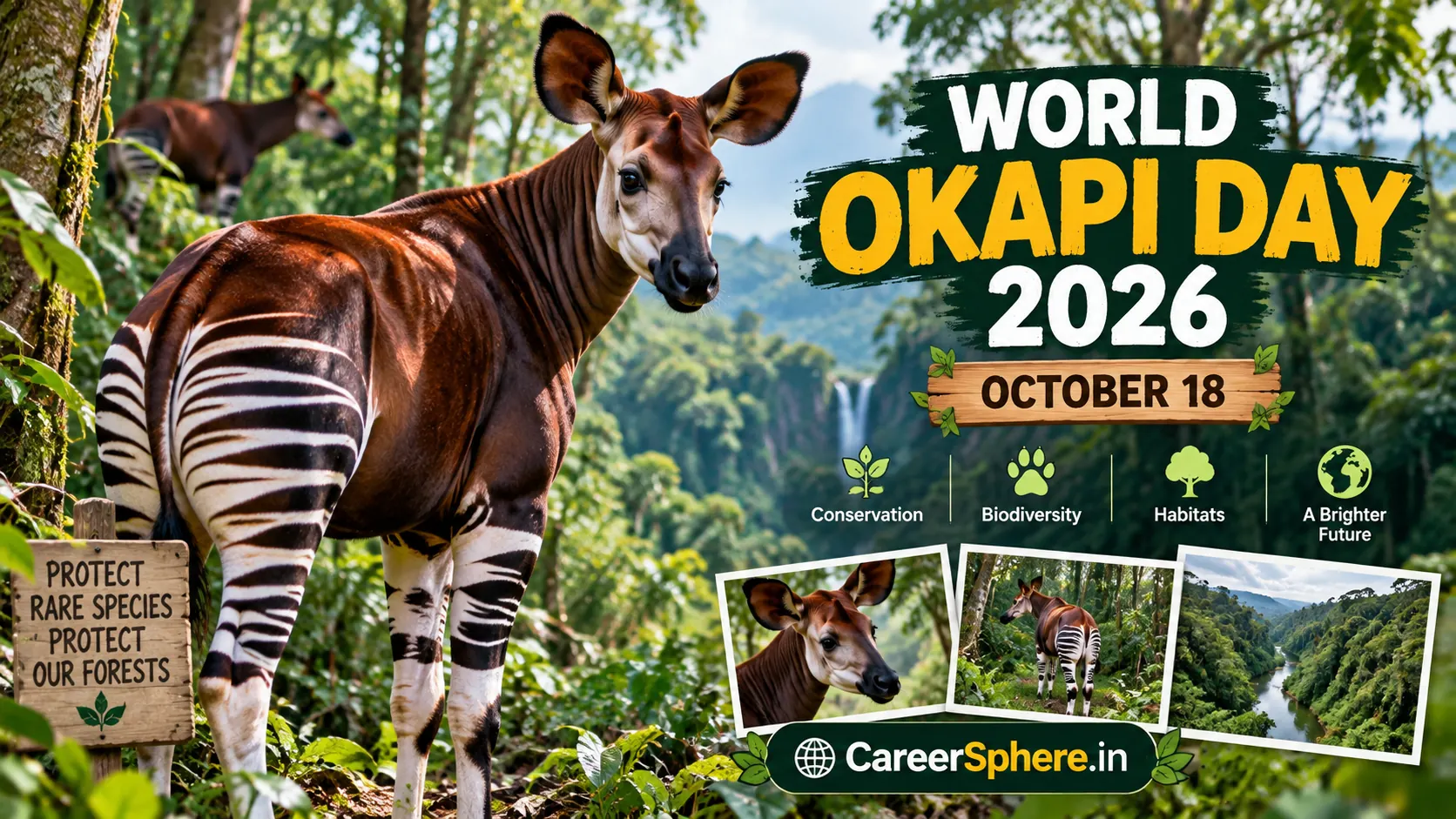
World Okapi Day 2026 is observed on October 18, 2026. The annual awareness day draws attention to one of Africa’s most distinctive rainforest animals—the okapi—and to efforts to protect the species and its habitat in the Democratic Republic of the Congo.
World Okapi Day 2026: Key Facts
| Date | October 18, 2026 |
|---|---|
| Day | Sunday |
| Focus | Okapi awareness and conservation |
| Native range | Democratic Republic of the Congo |
| Scientific name | Okapia johnstoni |
What Is World Okapi Day?
World Okapi Day is an awareness observance centred on the okapi and the forests on which it depends. Conservation organisations, zoos, educators and wildlife supporters use the day to introduce people to the animal, explain threats to its habitat and highlight conservation work involving local communities.
What Is an Okapi?
The okapi is a forest-dwelling mammal native to the Democratic Republic of the Congo. Its striped hindquarters can resemble a zebra, but the okapi belongs to the giraffe family. Its body is adapted to life in dense tropical forest, where vegetation provides both food and cover.
Okapis are generally elusive, which makes field observation difficult. Camera traps, surveys and other conservation methods help researchers understand their distribution and the condition of their habitat.
Why Okapi Conservation Matters
Protecting the okapi also means protecting a wider rainforest ecosystem. Habitat loss, illegal activities and instability can place pressure on wildlife and communities. Conservation therefore involves more than focusing on a single species: healthy forests, effective protection and community participation are all important.
Interesting Okapi Facts
- The okapi is the giraffe’s closest living relative.
- It is naturally found in the Democratic Republic of the Congo.
- Its zebra-like leg markings provide a striking appearance.
- Okapis live in dense rainforest and are difficult to observe in the wild.
- They use their long tongues while feeding and grooming.
- Protecting okapi habitat benefits many other forest species.
World Okapi Day Activities for Schools
Schools can use the day for wildlife education without needing expensive materials. Students can create rainforest food-web posters, compare okapis with giraffes, map the Democratic Republic of the Congo, research forest biodiversity or prepare short presentations on threatened species.
30-Minute Classroom Activity
Spend 10 minutes introducing the okapi and its habitat, 10 minutes asking small groups to identify threats and conservation solutions, and the final 10 minutes presenting one practical idea from each group. The activity combines geography, biology and environmental awareness.
How Individuals Can Observe World Okapi Day
- Learn about the okapi from reliable wildlife and conservation sources.
- Share verified facts rather than misleading wildlife posts.
- Visit a zoo or conservation institution that provides educational information about okapis.
- Discuss how rainforest conservation supports biodiversity and communities.
- Encourage children to research lesser-known threatened animals.
Why the Okapi Is Important to Biodiversity Education
Famous animals often dominate conservation discussions. The okapi is useful for teaching that lesser-known species can be equally important to ecosystems. Its story connects wildlife biology with rainforest protection, geography and community-based conservation.
World Okapi Day 2026 FAQs
When is World Okapi Day 2026?
World Okapi Day is observed on October 18, 2026.
Where do okapis live?
Wild okapis are native to the rainforests of the Democratic Republic of the Congo in Central Africa.
Is an okapi related to a zebra?
No. Despite its striped legs, the okapi is a member of the giraffe family.
Why is World Okapi Day observed?
The day raises awareness of okapis, their rainforest habitat and conservation efforts.
How can students participate?
Students can make posters, complete wildlife quizzes, research rainforest ecosystems, create maps or give short presentations about okapi conservation.
Related Awareness and Environment Articles
- International Day of the Intangible Cultural Heritage 2026
- World Octopus Day 2026: Facts, Activities & Quiz
- International E-Waste Day 2026
- World Spine Day 2026
Conclusion
World Okapi Day 2026 on October 18 offers an opportunity to learn about an unusual animal and the rainforest ecosystem it represents. Understanding the okapi’s habitat and conservation challenges can help students and the wider public see why protecting biodiversity requires attention to both wildlife and the communities sharing those landscapes.
Leave a Reply